
Vietnam with a Baby: First-Time Parent Survival Guide (2026)
Updated: May 6
Honest, practical advice for parents who have never done this before
There are two types of guide for traveling to Vietnam with a baby.
The first type tells you Vietnam is wonderful, the people are warm, the food is incredible, and you're going to have the most magical holiday of your life. All of that is true.

The second type tells you what the first type leaves out: that the heat at 1pm in Ho Chi Minh City in July is physically demanding for an adult and genuinely difficult for a baby. That crossing a main road in Hanoi's Old Quarter with a stroller requires strategy, not just courage. That you will not see as much of Vietnam as you planned, and that this is not only fine - it is exactly right.
This is the second type of guide.
It is written for parents who have never been to Vietnam with a baby before. It covers everything the experienced Vietnam-with-kids parents wish someone had told them before they boarded the plane - not the things you'll read in every other guide, but the specific, granular, locally-grounded things that make the difference between a holiday that works and one that breaks you by day three.
Read it before you pack. Re-read the relevant sections when you arrive.
"Nobody told us about the heat. Not like it actually is. We had our six-month-old out at 11am in Da Nang in August and I felt genuinely frightened. We went back to the hotel and didn't go out again until 5pm. From that day the whole trip changed - we relaxed into the rhythm and it became one of the best weeks of our lives."
- Fionnuala & Patrick O., Cork, Ireland
Before You Land - The Mindset That Makes Everything Easier
The single most important thing a first-time parent can do before visiting Vietnam with a baby isn't packing the right nappies or booking the right hotel. It's adjusting what they expect to accomplish.
You will do less than you planned. This is not failure.
Vietnam is a country with extraordinary depth. Ancient temples, floating markets, mountain passes, UNESCO heritage towns, island archipelagos, city food scenes that could fill a month of evenings. You will see a fraction of this. With a baby or toddler under 3, you will see even less. With two young children, your itinerary will be humbled to its essentials within 48 hours.
This is not a problem with Vietnam. It is not a problem with your child. It is the nature of traveling with young children, amplified by tropical heat, unfamiliar food, disrupted sleep schedules, and the genuine cognitive load of navigating a new country.
The parents who have the best Vietnam trips with babies are the ones who planned for less and arrived with space.They booked fewer cities. They gave themselves longer in each place. They had one activity per day, not three. They accepted early that the hotel pool might be the highlight of a given afternoon, and they were right.
KidEase Rentals insight:
Every day, we speak to families who arrive in Vietnam overwhelmed - not by Vietnam, but by their own itinerary. The families who message us saying "we're having the best holiday ever" are almost always the ones who slowed down. Book fewer cities. Stay longer in each one. Your child's rhythm will do the rest.
The Heat - What Nobody Tells You
Vietnam runs from the cool mountain north to the tropical south, and across its length there is no month where heat is not a factor somewhere. For parents with babies and toddlers under 3, understanding Vietnam's heat is not a weather detail. It is a health and safety matter.
The honest temperature picture by region
Ho Chi Minh City (year-round heat): Saigon sits close to the equator and is hot every single month. The coolest period (December–February) still reaches 30–33°C during the day. From April to August, midday temperatures regularly hit 36–38°C with humidity above 80%. The UV index between 10am and 3pm is extreme - equivalent to the worst days of an Australian summer, sustained for months.
Hanoi (seasonal variation): Hanoi has a proper cool season (December–February, 15–22°C) that is genuinely mild and the best time for families with babies. Summer in Hanoi (June–August) is 35–38°C with oppressive humidity - harder for babies than Ho Chi Minh City because of the additional humidity. Spring (March–April) is warm and pleasant; autumn (October–November) brings typhoon-season humidity.

Da Nang / Hoi An (dry season perfection, wet season caution): February to August is Da Nang's dry season - warm, relatively low humidity, manageable for young children. October is the wettest month on the central coast with genuine typhoon risk. If travelling in October, go to Phu Quoc or Nha Trang instead.
Nha Trang (most forgiving): Nha Trang's bay location creates naturally lower humidity than the inland cities. February to August is excellent. The bay water is calm year-round. It is consistently rated by international families as the most comfortable Vietnamese beach city for babies.
Phu Quoc (Gulf of Thailand microclimate): November to April is exceptional - 28–32°C, minimal rain, calm sea. May to October is wet season; July and August can have extended rain but the Gulf of Thailand keeps temperatures more moderate than the mainland.
The heat rules that experienced parents use
Rule 1: The Golden Windows. In every Vietnamese city, the best times to be outside with a baby or toddler are the first 2–3 hours after sunrise (typically 6–9am) and the 2–3 hours before sunset (4:30–7pm). Everything in between - particularly 10am to 3pm - is the danger zone for young children. The parents who thrive in Vietnam are the ones who structure their entire day around these windows.
Rule 2: UV is the hidden enemy. The temperature is obvious. The UV is less obvious and more dangerous. Vietnam's UV index regularly reaches 11–12 (extreme) during summer midday - the highest category. At this level, unprotected baby skin can burn in under 10 minutes. SPF 50+ applied 30 minutes before going out is non-negotiable. Cover arms, legs and the back of the neck. A wide-brim hat is essential from the moment you leave air conditioning.
Rule 3: The stroller canopy is not enough shade. Most travel strollers have canopies that extend significantly - the Stokke YOYO3 has a deep UPF 50+ visor that is better than most. But even a good canopy does not block heat radiating up from the pavement, which in direct sun can reach 50°C+. A stroller sunshade or muslin drape, combined with keeping to shaded streets, is the practical approach.
Rule 4: Hydration is active, not passive. Breastfed babies should feed more frequently in the heat. Formula babies need small extra water top-ups in extreme heat (consult your paediatrician for exact guidance by age). Toddlers over 6 months will need more water than at home - coconut water from a sealed carton is an excellent electrolyte-rich option available everywhere in Vietnam.
Rule 5: Watch for heat exhaustion signs. In babies: unusual fussiness, very red or very pale skin, rapid breathing, fewer wet nappies than normal. In toddlers: refusing water, lethargic behaviour, stopping sweating when they were sweating before. If you see these signs: get into air conditioning immediately, cool with damp cloth, offer fluids, and if symptoms don't resolve in 20–30 minutes, seek medical attention.
"We were confident because we'd been to Thailand before. Vietnam in July is different. The pavement reflects heat upwards and it sits on you. Our 14-month-old got flushed and stopped wanting water and we took her straight to the hotel and called a doctor. She was fine but it shook us. Mornings only after that."
- Astrid & Per J., Bergen, Norway
📚 Explore More Family Travel Guides
Hospitals and Medical Care - City by City
This is the section most parents wish existed before their first Vietnam trip. Knowing where the good medical facilities are before you need them is one of the most important things you can do.
The reassuring reality: Vietnam's major cities have excellent international-standard medical facilities. In Ho Chi Minh City, Hanoi, and Da Nang, you can access English-speaking doctors, paediatric specialists, and modern diagnostic equipment within 30–45 minutes of most tourist accommodation. The further you go from major cities, the more this changes.
Ho Chi Minh City
FV Hospital (Femme & Vocation) - District 7. The best overall private hospital in HCMC for international families. French-managed, English and French-speaking doctors, full paediatric department with experienced children's specialists. The most consistently recommended hospital for expats and international tourists with children. Address: 6 Nguyễn Lương Bằng, District 7.
Family Medical Practice - District 2 (Thảo Điền). GP-level consultations with English-speaking doctors, good for minor illness, fever assessment, gastro, rashes, ear infections. Faster for non-emergency situations than FV Hospital's A&E. Address: 34 Ngô Thời Nhiệm, District 3 (also District 2 branch).
Hạnh Phúc International Hospital - District 1. Good for paediatric emergencies in central HCMC. 24-hour emergency, paediatric department.
The Medical Practice - various branches in HCMC. Good for GP-level consultations, quicker for common childhood illnesses.
KidEase Rentals insight:
The most common reasons families with babies call us for medical referrals in HCMC: heat rash (very common in the first 24–48 hours - cool baths and loose clothing usually solve it without medical intervention), mild diarrhoea from dietary adjustment (manage with oral rehydration salts unless severe or with blood), and ear infections which can flare on planes. FV Hospital handles all of these well. Have travel insurance that covers private hospital treatment and the process is straightforward.
Hanoi
Vinmec International General Hospital - Times City Complex, Hai Bà Trưng District. The standout recommendation for international families in Hanoi. High-spec facilities, English-speaking doctors, strong paediatric department. Address: 458 Minh Khai, Hai Bà Trưng.
Hong Ngoc Hospital - 55 Yên Ninh, Ba Đình District (near the Old Quarter). More central than Vinmec, good for emergencies close to the tourist centre. English-speaking staff available.
Family Medical Practice Hanoi - 298 Kim Mã, Ba Đình. GP-level English-language consultations. Good for moderate illness that doesn't require A&E.
SOS International - Long-standing international medical group with Hanoi presence. Good for travel health consultations and referrals.
Da Nang
Đà Nẵng Hospital C - The main public hospital reference point, but international families typically use private options.
Family Medical Practice Da Nang - 96–98 Nguyễn Văn Linh. English-speaking GP-level care. The most used by international tourists in Da Nang for non-emergency situations.
Vinmec Da Nang - 30/4 Street, Hải Châu District. The strongest international-standard option in Da Nang for more serious situations.
Note for families based on the Non Nuoc / My Khe Beach strip: these hospitals are 15–25 minutes by Grab from the main resort area. Know your route before you need it.
Hoi An
Hoi An has no large international hospital. For minor illness: Hoi An Traditional Medicine Hospital (local standard) and several private clinics on Trần Hưng Đạo Street see tourists regularly. For anything more serious, the standard practice is to Grab to Da Nang (30–40 minutes), where Vinmec or Family Medical Practice are the appropriate facilities.
Know this before you arrive. Having a toddler with a high fever at 10pm in Hoi An's Ancient Town and not knowing whether to stay or go to Da Nang is stressful. The general rule: anything you would take to A&E at home, go to Da Nang. Anything you'd call your GP for at home, use a Hoi An clinic or telemedicine first.
Nha Trang
Vinmec Nha Trang - 42 Trần Phú. Good international-standard facility on the main boulevard, within Grab distance of all central accommodation. English-speaking doctors.
Phương Chi Hospital - 3 Thái Nguyên. Good for paediatric consultations in Nha Trang.
For serious emergencies: medical evacuation to Ho Chi Minh City (1 hour by plane) may be necessary. This is why comprehensive travel insurance with emergency evacuation cover is non-negotiable for Nha Trang, and especially for Phu Quoc.
Phu Quoc
Vinpearl Hospital (An Thới) - located on the southern island. Good for resort-area guests.
Bệnh viện Đa khoa Kiên Giang Phú Quốc - the main public hospital in Dương Đông town. For serious situations, medical evacuation to Ho Chi Minh City (1 hour 20 minutes by plane) is the standard protocol.
The honest reality about Phu Quoc: this is an island with improving but still limited medical infrastructure compared to the mainland cities. For families with babies under 6 months or with complex medical histories, this is worth factoring into your destination choice. It is also why comprehensive travel insurance - including emergency evacuation - is especially important here.
Travel insurance - what to look for
Emergency medical evacuation cover - essential for Phu Quoc, strongly recommended everywhere
Paediatric cover included - confirm babies and toddlers are explicitly covered as named dependants, not assumed
ASEAN-wide cover - in case a medical situation requires treatment in Singapore or Bangkok (both realistic for complex situations)
No pre-existing condition exclusion that captures normal newborn/infant conditions
"Our 18-month-old got a febrile seizure from a high temperature in Hanoi. It was the most frightening 20 minutes of our lives. Our hotel called Vinmec, we were there in 15 minutes, they were exceptional. The doctors were calm, English-speaking, and had him assessed and settled within an hour. We'd always travelled with good insurance but this was the moment we understood why."
- James & Ciara M., Dublin, Ireland
Nappies, Formula and Baby Supplies - The Real Shopping Guide
Nappies / Diapers
The good news: Pampers and Huggies are available in every Vietnamese city. The important detail: the sizing runs slightly different to Western sizing, and the largest size commonly available is smaller than what older toddlers may need in European or Australian sizing.

Where to buy:
Ho Chi Minh City: BigC (multiple locations, best selection), Lotte Mart (District 7), Co.opMart, Circle K, and VinMart all stock Pampers and Huggies in most sizes. Lazada and Shopee (Vietnamese equivalents of Amazon) deliver next-day to hotels in HCMC.
Hanoi: Vinmart, BigC, Lotte Mart on Đống Đa. Good availability in tourist areas.
Da Nang: BigC Da Nang (Ông Ích Khiêm Street), Lotte Mart Da Nang. The most reliable supply outside HCMC.
Hoi An: Limited - the small supermarkets near the market carry Pampers but selection is narrow. Buy in Da Nang before coming or bring enough for your stay.
Nha Trang: Maximark (38 Nguyễn Thiện Thuật) and Nha Trang Center mall have reasonable selection. Don't rely on resort shops.
Phu Quoc: Limited. Bring significantly more than you think you need. What exists in Dương Đông town is basic.
Practical tip: Bring 3–4 days' supply of your preferred brand from home. Within those days you will have identified the nearest reliable supermarket in your city and confirmed local availability.
Baby Formula
Vietnamese brands (widely available everywhere): Vinamilk and Dielac are the most common Vietnamese formula brands, available at every pharmacy, Circle K and convenience store across the country.
International brands (availability by city):
Aptamil - available at BigC in HCMC and Hanoi; limited elsewhere
NAN (Nestlé) - relatively consistent across major cities
Enfamil - patchy outside HCMC
HiPP Organic - rare; bring your own supply
Kendamil - very rare; assume not available and bring from home
The rule: bring enough formula for your entire trip. If you can find your preferred brand locally, great - but do not plan your trip around it. For longer trips (7+ nights), source your backup supply in your first big city (HCMC or Hanoi) before travelling onward.
Baby Food and Pouches
Good news: Ella's Kitchen pouches, HiPP pouches, and Heinz baby food are available in BigC HCMC and Lotte Mart, but inconsistently. Bring your own stock for the first week and the first few days in each new city.
The local alternative that experienced parents universally praise: cháo (Vietnamese rice porridge). Available at almost every Vietnamese restaurant and food stall, it is mild, nutritious, and appropriate from around 6 months. Order it plain (cháo trắng) or with chicken (cháo gà) for babies beginning protein. It is arguably the best baby food in Southeast Asia and your baby will almost certainly take to it enthusiastically.
Other local baby-appropriate foods:
Ripe banana - everywhere, reliable, familiar
Steamed rice - available at any meal, appropriate from 6–7 months
Fresh papaya - sweet, soft, digestible
Bánh bao (steamed buns) - soft, mild, toddler staple
Pharmacies
Vietnam's pharmacies (nhà thuốc) are excellent and widespread. In major cities, most are open until 9–10pm; some are 24 hours. Pharmacists in tourist areas frequently speak basic English and are helpful with common medication queries.
What you can easily buy: paracetamol (Tylenol/Calpol equivalent - look for Hapacol Siro for children), ibuprofen, oral rehydration salts (Oresol), antihistamine, hydrocortisone cream for heat rash, baby sun cream, insect repellent.
What you should bring from home: any prescription medications, your preferred baby paracetamol/ibuprofen brand and dosing, DEET-free insect repellent (most Vietnamese repellents contain DEET which is not recommended for babies under 6 months), SPF 50+ baby sunscreen (available but expensive and limited brand choice).
Vietnam Baby Travel Guides & Tips
Traffic, Roads and Crossing the Street with a Baby
This is the section that causes the most anxiety for first-time visitors to Vietnam - and with some justification. But it is manageable. Here is exactly what you need to know.
The reality of Vietnamese traffic
Vietnamese cities - particularly Ho Chi Minh City and Hanoi - have some of the densest motorbike traffic in the world. Ho Chi Minh City has an estimated 8 million registered motorbikes. At rush hour (7–8:30am and 5–7pm), the main streets of both cities are a continuous flow of scooters, motorbikes, cars, and delivery vehicles moving simultaneously in multiple directions.
For a first-time visitor from Europe, Australia, or North America, this is genuinely overwhelming at first sight. The noise, the proximity, the apparent absence of any gap large enough to walk through - it is a lot. With a baby in a stroller or carrier, the stakes feel higher.
The important truth: Vietnamese traffic moves fast in volume but generally slow in speed on city streets. Motorbikes slow for pedestrians. The traffic flows around you if you move steadily and predictably. The system is chaotic to look at but has an internal logic that pedestrians learn quickly.
How experienced parents cross the road in Vietnamese cities
Method 1 - The steady walk method: Make eye contact with the nearest drivers, establish your intention to cross, step forward confidently and walk at a steady pace. Do not stop. Do not speed up suddenly. The traffic flows around predictable pedestrians remarkably well. Hesitating is more dangerous than walking steadily.
Method 2 - Follow a local: In busy areas, following closely behind a local Vietnamese pedestrian - particularly groups of women, who are the most experienced street-crossers in any Vietnamese city - is the safest and fastest method.
Method 3 - Use pedestrian infrastructure: In Ho Chi Minh City's Districts 1 and 3, and in Da Nang's main tourist area, pedestrian crossings and traffic lights have improved significantly. Use them when available.
Method 4 - Avoid the rush hours: 7–8:30am and 5–7pm on main streets is when crossing is hardest. Structure outings to avoid peak traffic.
With a baby carrier vs a stroller

In dense urban areas - particularly Hanoi's Old Quarter, the Bến Thành Market area of HCMC, and Hội An's Ancient Town laneways - a baby carrier is significantly more practical than a stroller for crossing roads and navigating crowds. You are more agile, you occupy less pavement space, and the traffic reads you more easily.
On wide boulevards and resort areas - Nha Trang's Trần Phú, Da Nang's beach promenade, resort grounds at Phu Quoc - a stroller is far more practical.
The answer is both. Experienced parents in Vietnam use a stroller for longer walks and resort days, and a baby carrier for tight, busy city environments. Carrying your own carrier (lightweight) plus renting a stroller gives you the flexibility for both scenarios.
City-by-city traffic reality
Ho Chi Minh City: the most intense traffic in Vietnam. District 1 near the backpacker area and Bến Thành Market can be genuinely difficult with a stroller. Districts 2 and 3 are more manageable. The riverside area in District 1 is relatively quieter.
Hanoi: Old Quarter is dense but walkable - the lanes are narrow but motorbike speed is reduced. Hồ Hoàn Kiếm (Sword Lake) area is increasingly pedestrianised on weekends.
Da Nang: significantly more manageable than HCMC or Hanoi. Wide streets, better pedestrian infrastructure, and the beach promenade is entirely traffic-free. The most stroller-friendly major city in Vietnam after Nha Trang.
Hội An: The Ancient Town is closed to vehicles in the evenings, making it one of the easiest environments for families with strollers in all of Vietnam. Daytime in the Old Quarter lanes requires awareness but is manageable.
Nha Trang: the Trần Phú Boulevard is 6km of traffic-free promenade. Central Nha Trang streets are busy but well-organised. The bay-facing promenade is the best pedestrian environment in Vietnam.
Phu Quoc: relatively low traffic in tourist areas. The resort clusters are effectively car-free. The roads between areas are faster and require car seats - Grab cars without car seats are the main risk on Phu Quoc, not street crossings.
"The traffic in Hanoi is exactly what everyone says it is. On day one we just stood on the pavement unable to move. By day three we were crossing like locals. It clicks - you just have to trust the process. With a carrier instead of a stroller in the Old Quarter it was so much easier. We wish someone had told us that before day one."
- Beatrice & Søren H., Copenhagen, Denmark
Transport - The Complete First-Timer Guide
Grab - your primary transport tool
Grab is the dominant ride-hailing app across Vietnam and is the answer to most transport questions for families with babies and toddlers. It is available in all major cities, prices are displayed upfront, you can see your driver's route, and payment via card is standard.
Download Grab before you arrive. Set up your account on the plane. It is unavailable in some rural areas but works in every city covered in this guide.
The car seat situation with Grab: Grab cars in Vietnam do not provide car seats. This is the most important transport fact for families with young children. Your options:
Rent a car seat through KidEase Rentals for the full duration of your trip and carry it in each Grab car
Use Grab only for very short urban journeys where you make an informed risk decision (parents do this; be honest with yourself about what you're comfortable with)
Book private transfers through your hotel, which can pre-arrange car seats when asked
For airport transfers - which are almost always the longest and fastest road journeys of your Vietnam trip - a car seat is non-negotiable.
Vietnamese domestic flights with a baby
Vietnam's domestic flight network is excellent and the best way to cover distances between cities with a baby. Vietnam Airlines, Vietjet, and Bamboo Airways all operate frequently between HCMC, Hanoi, Da Nang, Nha Trang, and Phu Quoc.
Key facts for parents:
Babies under 2 travel on an adult's lap at a reduced fare (typically 10% of adult fare on Vietnam Airlines)
Bassinets are available on Vietnam Airlines for longer routes - request at booking, not at check-in
Strollers can be gate-checked at no charge on all Vietnamese domestic airlines - you keep the stroller to the departure gate and collect it as you step off the plane
The Stokke YOYO3 - the most popular stroller we rent in Vietnam - folds to cabin luggage dimensions and fits in the overhead compartment, meaning no baggage wait on arrival
Security queues at Vietnamese domestic airports can be long. Add 30 minutes to your normal check-in buffer with a baby
Trains
The Reunification Express runs the length of Vietnam between Hanoi and Ho Chi Minh City with stops at Da Nang, Hội An (Đà Nẵng station, 30 minutes away), Nha Trang and others. Train travel in Vietnam is scenic and the berths are reasonably comfortable.
With a baby under 12 months: the overnight sleeper train is a genuinely reasonable option for parents comfortable with improvised sleep logistics. The rocking motion can help babies sleep. Private cabin options (Livitrans, Violette Express on some routes) are cleaner and more manageable than standard berths.
With an active toddler: daytime train journeys are manageable for 2–3 hours. Overnight trains with toddlers 18–36 months require significant entertainment preparation and acceptance that sleep will be disrupted.
The honest assessment: for most families with babies under 3, domestic flights are faster, simpler, and easier. The train is a beautiful experience - worth considering for the specific right circumstances.
Taxis
Use Grab where possible. If using street taxis, Mai Linh (green) and Vinasun (white with red) are the most reliable fleets in Ho Chi Minh City. Always use the meter; never accept a quoted flat price before getting in.
Motorbike taxis (Xe ôm / Grab Bike)
Not appropriate for travel with babies or toddlers. Full stop.
The Biggest Mistake - Trying to Do Too Much
Every experienced Vietnam-with-baby parent will tell you the same thing unprompted. It is the single most common piece of advice given in every parent forum, every expat Facebook group, every post-trip review: we tried to do too much.
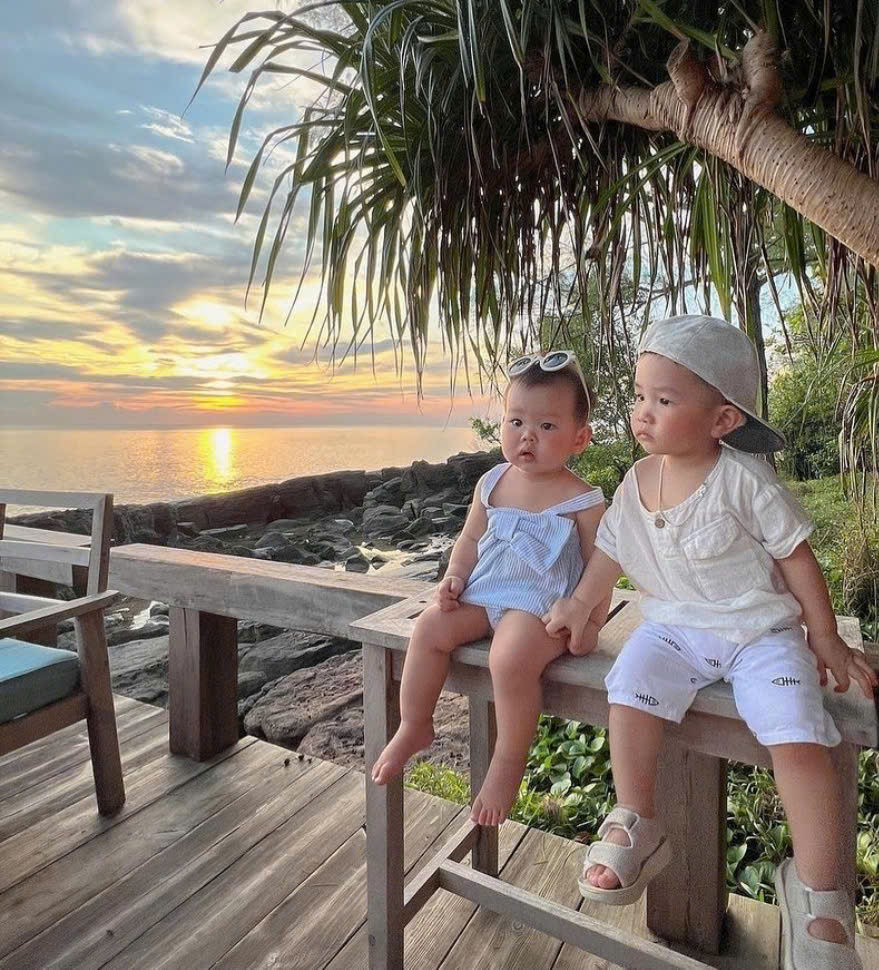
What this looks like in practice:
Booking five cities in ten days with a 9-month-old
Planning morning sightseeing, afternoon activity, evening restaurant, repeat
Treating the trip like the pre-baby Vietnam trips you've been on
Measuring success by how many things you ticked off the list
What happens when you do this:
Overtired baby from disrupted sleep and too much stimulation
Overtired parents from managing an overtired baby in a foreign country in the heat
The holiday starts to feel like something to survive rather than something to enjoy
You spend the whole trip feeling like you're failing because you're not doing what you planned
What actually works
Two cities maximum for a 7–10 night trip with a child under 2. One city for families with a baby under 6 months who want genuine rest and routine.
One activity per half-day, maximum. Morning beach or walk. Hotel pool in the heat of the day. Evening market or restaurant. That is a full and good day with a baby or toddler in Vietnam.
A pool is not a waste. The families who have the most enjoyable Vietnam trips with young children are frequently the ones who spent two hours in the resort pool every afternoon and describe it as the highlight. A toddler in a warm pool in a beautiful garden in Vietnam is having an extraordinary experience even if they don't know it yet.
The daily rhythm that works: out early (6:30–9:30am), back at the hotel by late morning, lunch, nap, pool or quiet time, out again from 4:30pm for the best part of the day, dinner early (most Vietnamese restaurants open from 6pm; families with young children eating at 6:30pm avoid both heat and peak crowd).
City-specific pace guidance
Ho Chi Minh City: give yourself 3 nights minimum. Don't try to cross the city repeatedly - choose one area and base yourself in it.
Hanoi: 2–3 nights is sufficient for a first visit with a baby. The Old Quarter as a base keeps you close to everything without car dependency.
Hội An: deserves at least 3 nights - ideally 4–5. The rhythm of Hội An (early morning, retreat midday, magical evenings) is perfectly designed for families with young children.
Nha Trang: 4–5 nights is the sweet spot. Families who give it fewer are the ones who leave saying "we needed more time."
Phu Quoc: a minimum of 4 nights to feel the island rhythm. The families with the best Phu Quoc experiences are those who stayed 5–7 nights and fully let go of any non-beach agenda.
"We booked HCMC, Da Nang, Hội An, Hà Nội and Phu Quoc in 12 days. With a 15-month-old. We made it through all five but I cried at Hanoi airport going home - not from happiness, from exhaustion. The two nights in Phu Quoc at the end were the only time we actually relaxed. We're going back for just Phu Quoc and Hội An, 10 nights, and already it feels like a completely different holiday."
- Rachel & Tom B., Edinburgh, Scotland
Ten Other Mistakes First-Time Parents Make in Vietnam
These are the things nobody mentions until after it's happened.

Mistake 1: Not booking baby equipment in advance
Vietnam is one of Asia's most popular family destinations. The best travel cots, strollers and car seats book out - particularly during peak periods (Christmas, Tet, July–August school holidays, February–April dry season). Families who message KidEase Rentals on arrival sometimes find their preferred model already reserved.
Mistake 2: Assuming hotels provide good baby equipment
Even five-star resorts in Vietnam provide basic, worn travel cots with poor ventilation - a genuine issue in tropical heat. In some cities, the hotel cot is a folding metal frame with a 2cm foam pad. High chairs in rooms are essentially non-existent. Car seats in airport transfers never provided. Plan to rent from the start rather than discover the gaps on arrival.
Mistake 3: Bringing the wrong stroller
A large full-size stroller will not fit in a Vietnamese taxi boot, is awkward on beach sand, and is a genuine problem on Hanoi's Old Quarter pavements. A lightweight compact travel stroller - the Stokke YOYO3 folds in one second and fits in every Grab car - is the tool for Vietnam. Many families who bring their large home stroller end up leaving it at the first hotel.
Mistake 4: Underestimating how much Grab they'll use
First-time parents often think they'll walk more and taxi less. Then the heat arrives at 10am. Then the distance between the Ancient Town and the beach turns out to be 5km. Grab becomes the infrastructure of every day, multiple times per day. Budget for it generously - it is cheap by Western standards but adds up across a long trip.
Mistake 5: Ignoring time zones for baby sleep
Vietnam is UTC+7. For families from the UK (+0/+1), Australia (AEST +10, AEDT +11), USA (EST -5), the time difference is significant. Babies and toddlers typically take 3–5 days to adjust, during which early waking (4–5am) is standard. Build this into your first-city schedule rather than trying to power through exhaustion. It passes.
Mistake 6: Not downloading offline maps
Google Maps works in Vietnam but requires mobile data. In areas with patchy signal - rural roads, some island areas, mountain regions - offline maps are essential. Download your destination maps offline before arrival. Maps.me is a good backup app with offline Vietnam coverage.
Mistake 7: Drinking tap water
In Vietnam, tap water is not safe to drink for adults or babies at any age. All drinking water - including water used to mix formula, rinse dummies/pacifiers, and brush teeth - should be bottled or previously boiled. This applies in all cities including luxury hotels. Most hotels provide two free bottles per room per day; buy additional supply at convenience stores (very cheap).
Mistake 8: Letting toddlers touch temple offerings and altar items
Vietnamese temples - Buddhist pagodas, Confucian temples, Cham towers - are active places of worship. The ornaments, food offerings, incense holders, and candles on altars are not decorations. Beyond the cultural respect required, active incense smoke is not suitable for babies to breathe at close range, and the offerings themselves are not hygienic for babies who put everything in their mouths. A carrier rather than a stroller gives you maximum control in these environments.
Mistake 9: Not having offline translation
Google Translate's offline Vietnamese language pack is invaluable. Download it before you travel. Vietnamese is a tonal language - verbal communication without the app will be significantly more difficult than in Thailand or Bali where English is more widely spoken in tourist areas. The camera translation feature (point your phone at a Vietnamese menu and it translates in real time) is one of the most useful things you can have with a baby in a Vietnamese restaurant at 7pm.
Mistake 10: Missing the Vietnamese warmth toward babies
Vietnamese culture has a profound warmth toward babies and young children that can surprise Western families at first. Strangers - in markets, on streets, in restaurants - will want to hold your baby, touch their cheeks, comment on their appearance, and engage enthusiastically with toddlers. This is genuine affection, not imposition. Receiving it gracefully is part of the cultural experience. If your baby becomes overwhelmed, a carrier keeps them closer and naturally signals less accessibility. But lean into it - your child being admired in a Vietnamese market is one of the quietly beautiful moments of these trips.
KidEase Rentals - How We Make This Easier
Everything described in this guide is more manageable when the logistics of baby equipment are handled before you arrive.
The families who have the most relaxed first Vietnam trips with babies are consistently the ones who land at the airport, clear immigration, and get into a transfer car where the car seat is already fitted. Who check into their hotel and find the travel cot already set up and aired. Who sit down to their baby's first Vietnamese meal and have a high chair ready at the table.
KidEase Rentals delivers premium, hospital-grade-clean baby equipment directly to your hotel, resort, villa or Airbnb across all of Vietnam - before you arrive.
What we provide:
🚼 Strollers - Stokke YOYO3, Nuna TRVL, Cybex Orfeo, Combi Spazio Duo (double)
🚗 Car seats - Nuna PIPA Next, Cybex Cloud Z (infant), Nuna RAVA, Nuna PRUU (toddler), Nuna EXEC (all-in-one)
🛏️ Travel cots - Nuna SENA Aire (full-mesh breathable - essential in Vietnam's heat), Stokke Snoozi 👉 Baby cot and travel crib rental in Vietnam
🍽️ High chairs - Stokke Clikk, Cybex Lemo 2
🧸 Additional - baby carriers, bouncers, sterilisers, Baby Brezza formula machines, breast pumps, white noise machines, humidifiers, playpens and more
We deliver to: Ho Chi Minh City, Hanoi, Da Nang, Hội An, Nha Trang, Phu Quoc, Mui Ne, Vũng Tàu, Hue, and anywhere else in Vietnam.
Multi-city trips: one booking, one WhatsApp conversation, delivery in your first city, collection in your last.
📲 WhatsApp: +84 7088 66447 (fastest - most families book in a 5-minute conversation) 📧 Email: Admin@KidEase-Rentals.com
📸 Instagram: @KidEase_Rentals
The Emotional Reality - A Note for First-Time Parents
No guide covers this adequately. So let us say it plainly.
Traveling to Vietnam with a baby for the first time - particularly if this is your first overseas trip as a parent - is harder than you expect and more rewarding than you imagine. Often in the same afternoon.

There will be a moment - probably in the first 48 hours - where everything goes wrong simultaneously. The baby won't settle in an unfamiliar cot. You haven't found a restaurant with food your toddler will eat. You're drenched in sweat at 6pm having achieved nothing on the day's list. Your partner is quietly furious about a decision that seemed fine this morning.
This is not Vietnam failing you. This is every first-time parent in a new country. It passes. It always passes. And on the other side of it - almost without exception - is the moment you start to feel the rhythm of the country and the rhythm of your child in it.
The families who travel to Vietnam with babies and come back saying it was the best holiday of their lives - and there are thousands of them - didn't have a holiday without difficult moments. They had a holiday where the good moments were so genuinely good that the difficult ones became part of the story.
Vietnam is extraordinarily forgiving of first-time parents. The warmth of the people, the quality of the food, the beauty of the light, the patience of the culture toward young children, the generosity of the accommodation - all of it is working in your favour. Trust the preparation you've done. Go slowly. Follow your child's rhythm. And give yourself permission to be exactly where you are, doing exactly what you're doing.
It is enough. It is more than enough.
❓ FAQ - Vietnam with a Baby: First-Time Parent Questions
Is Vietnam safe for babies?
Yes. Vietnam's major cities have excellent international medical facilities, clean accommodation options, widely available baby supplies, and a deeply baby-welcoming culture. The main considerations - heat, unfamiliar food, traffic - are all manageable with the preparation this guide provides.
What vaccinations do babies need for Vietnam?
Consult your GP or travel health clinic at least 6–8 weeks before travel. Common recommendations for Vietnam include hepatitis A, hepatitis B (likely already given), typhoid (from 2 years), and ensuring routine vaccinations (MMR, DTaP) are up to date. Malaria: risk is low in major tourist destinations but exists in some rural and highland areas - discuss with your travel health clinic. Japanese encephalitis vaccination is sometimes recommended for longer rural stays.
What is the best age to take a baby to Vietnam?
There is no universally right answer, but the most consistently positive reports from families come from two groups: babies aged 3–9 months (portable, not yet walking, feed and sleep more predictably) and children aged 3–5 years (can genuinely engage with and remember the experience). The hardest travel age is typically 10–20 months - newly mobile, strong opinions, unpredictable sleep, difficult to contain in public spaces.
What should I bring from home vs rent in Vietnam?
Bring: baby carrier, formula for first 3 days, food pouches for first 3 days, DEET-free insect repellent, SPF 50+ baby sunscreen, baby swim nappies, comfort toy/sleep companion, medications. Rent from KidEase Rentals: stroller, car seat, travel cot, high chair - all bulky, heavy, or at risk of hold-baggage damage.
How many cities should I visit on a first trip to Vietnam with a baby?
One or two. Maximum two with a child under 2. The families who visit two cities and stay 4–5 nights in each have consistently better experiences than those who visit four cities in the same timeframe.
Is it worth going to Vietnam with a baby vs waiting until the children are older?
Yes - unequivocally. Babies under 2 are remarkably portable and adaptable. They sleep on planes, sleep in carriers, experience the world through engagement and connection rather than itineraries. Vietnam's warmth toward babies makes it one of the best countries to travel with an infant. The parents who wait until children are older sometimes find the older children harder to travel with than the baby was.
🔗 Vietnam Baby Travel Questions Hub
🚗 Transport, Car Seats & Getting Around
🛴 Strollers, Carriers & Mobility
🧸 Baby Equipment Rental & Delivery
🛏️ Hotels, Airbnbs & Family Setup
🏝️ Destination-Specific Baby Travel Guides
🎒 Packing, Safety & Essentials
🛒 Stroller & Gear Rentals by Location
🌏 Vietnam Family Travel Blog Hub (Expert Guides for Parents)
🏙️ City & Destination Guides (Where to Go with a Baby)
🧭 Planning Your Vietnam Family Trip
🏡 Accommodation, Airbnb & Family Setup
🚗 Transport, Flights & Getting Around
🧸 Baby Gear, Strollers & Equipment
🛡️ Safety, Health & Practical Tips
Baby equipment by city
KidEase Rentals - Vietnam's trusted baby and child equipment rental service for international families.
📞 +84 7088 66 447 | 📧 admin@KidEase-Rentals.com | Delivering across Vietnam


Comments