
North Vietnam vs Central Vietnam for Families with Babies, Toddlers & Young Children (2026)
Updated: May 2
The complete 2026 guide for international parents planning their first Vietnam family trip
It is the question that follows the first big decision - "we're going to Vietnam" - almost immediately. North or central? Hanoi or Da Nang? Ha Long Bay or Hội An? Mountains or beach?
For families travelling without young children, this is a preference question. For families with babies, toddlers, and children under six, it is a logistics question with a meaningful answer. The two regions have different climates, different infrastructure, different activity profiles, and different practical realities for parents managing nap schedules, sun exposure, strollers, car seats, and the unpredictable rhythms of early childhood.
This guide gives you the honest, complete comparison - so you can choose the right region, plan it properly, and arrive knowing exactly what to expect.
"We agonised over this decision for weeks. Ended up doing central Vietnam and it was perfect for our 22-month-old. But knowing why we made the right choice - that took reading guides like this one. Worth every minute."
- Nikolay & Olga A., Dubai, UAE.

👨👩👧 Who This Guide Is For
This guide is designed for:
International families traveling to Vietnam for the first time
Parents with babies, toddlers, or children under 6
Families deciding between North Vietnam (Hanoi region) and Central Vietnam (Da Nang / Hội An)
Parents prioritising safety, comfort, and realistic daily travel logistics
🧭 North vs Central Vietnam – Quick Decision Guide
If your priority is… | Choose |
Best weather (Mar–Aug) | Central Vietnam |
Cooler temperatures | North Vietnam |
Beaches + easy logistics | Central Vietnam |
Culture + landscapes | North Vietnam |
Traveling with baby (0–2 yrs) | Central Vietnam |
Traveling Oct–Nov | North Vietnam |
👉 If your child is under 3 → choose Central Vietnam (Da Nang / Hội An)
👉 If traveling Oct–Nov → choose North Vietnam (Hanoi region)
👉 If you want beaches + easiest logistics → Central Vietnam
👉 If you want culture + mountains → North Vietnam
Understanding the Two Regions
North Vietnam encompasses Hanoi and the surrounding provinces - including Ha Long Bay (3.5 hours east), Ninh Binh (2 hours south), and Sapa (5–6 hours northwest). It is Vietnam's cultural and historical heartland: ancient temples, karst mountain landscapes, the country's most sophisticated cuisine, and the cool highland atmosphere that distinguishes it from anywhere else in the country.

Central Vietnam runs along the country's narrow waist, anchored by Da Nang, Hội An, and Hue. It is where Vietnam's finest beaches, most characterful small towns, and best-preserved historic architecture concentrate - all within 30–40 kilometres of each other along a stretch of coastline that has been drawing international families for two decades.
Both are genuinely extraordinary. The decision is about which one is right for your specific family, at your child's specific age, in your specific travel window.
Climate - The Most Important Factor Parents Get Wrong
Climate is not a background consideration for families with babies and toddlers. It determines whether outdoor activities are safe, whether beach days are possible, and whether the daily rhythm that makes these trips work - out early, retreat at midday, out again in the evening - is achievable at all.
North Vietnam: four seasons, real winter, typhoon-free
The north has Vietnam's only true seasonal variation. Hanoi in January reaches 15–18°C - genuinely cool, requiring a jacket for adults and proper layering for babies. In summer (June–August) it is 35–38°C with oppressive humidity and significant rainfall. The best family windows are spring (March–April, warming and clear) and autumn (October–November, mild and often beautiful).
For babies under 12 months: the cool season north (October–April) is manageable and often lovely. The contained urban environment of Hanoi suits young babies well. The critical planning point: pack appropriate cold-weather baby layers for any visit between November and February, when evenings drop below 15°C.
For Ha Long Bay specifically: the optimal family window is March–May and September–November. Summer brings heat and typhoon risk in the Gulf of Tonkin - not dangerous with a good cruise operator, but logistically complex. Winter can be grey and cold on the water.
For Sapa: the cool highland climate (always 5–10°C cooler than Hanoi) means preparation for cold in any month outside June–August. January Sapa can genuinely freeze - not appropriate for babies under 12 months without serious cold-weather gear.
Central Vietnam: the finest dry season in the country - with a significant wet season
Central Vietnam's dry season (February–August) is arguably the best beach weather in Vietnam. Da Nang and Hội An in March, April, and May are warm (28–32°C), sunny, humid but not oppressively so, with calm South China Sea conditions. For families with babies and toddlers, this is genuinely outstanding - manageable heat, reliable sunshine, calm beach swimming.

The wet season (September–January) is where central Vietnam's planning becomes critical. October is the wettest month on the central coast, with genuine typhoon risk. Some years see extended flooding in the Hội An Ancient Town (it is literally built on a flood plain). For families with babies who need reliable outdoor access and daily structure, October and November in central Vietnam require significant contingency planning.
The critical insight: if you're travelling in October or November, go to Nha Trang or Phu Quoc in the south instead. Both are entering their dry season when the central coast is at its most challenging.
Month | North Vietnam | Central Vietnam |
Jan–Feb | ⚠️ Cool, occasional rain | ⚠️ Transitional, cooler |
Mar–Apr | ✅ Excellent - warming, clear | ✅ Peak dry season |
May–Jun | ✅ Good | ✅ Hot, sunny, good |
Jul–Aug | ⚠️ Hot, humid, rain | ✅ Good but hot |
Sep–Oct | ✅ Autumn colours, clearing | ❌ Rain, typhoon risk |
Nov–Dec | ✅ Good (Hanoi); cold (Sapa) | ⚠️ Rain, some flooding |
KidEase Rentals insight: The single most common planning mistake we see from northern European and Australian families: visiting Da Nang in October because it fits the school term calendar. October is Da Nang's worst month. If October is your only window, the north - which is beautiful in autumn - or the south (Phu Quoc, Nha Trang) are significantly better choices.
🔎 “What Parents Actually Search (Answered Clearly)”
Is Da Nang or Hanoi better with a baby? → Da Nang (easier, safer, more predictable)
Where should I go in Vietnam with a toddler? → Central Vietnam first
Is North Vietnam too difficult with a baby? → Not difficult, but less convenient
Is Vietnam good for young children overall? → Yes, with the right region + setup
📚 Explore More Family Travel Guides
The Best Places to Visit - North and Central, by Age
🏙️ North Vietnam for families
Hanoi is the north's family base - and a genuinely excellent one in the right season. The Old Quarter requires a compact stroller and strategic timing (early mornings before motorbike traffic peaks, weekend pedestrian hours around Hoàn Kiếm Lake), but the rewards - the lakeside walks, the puppet shows, the morning market culture - are real. Districts like Tây Hồ (West Lake) and the newer residential areas are significantly more stroller-friendly.

Ha Long Bay - the overnight cruise through 1,969 limestone islands - is one of the most surprising family-friendly experiences in Vietnam. The contained cruise structure suits babies and toddlers better than most parents expect. The stroller on the cruise deck is genuinely useful as a nap space and mealtime seat.
Ninh Binh - the "Ha Long Bay on land" boat tours through karst rivers - works beautifully for babies in carriers and children 4–6 who are captivated by caves and river scenery.
Sapa - best reserved for children 4+ who can walk independently on mountain paths. The Fansipan cable car (35-minute gondola to the summit of Vietnam's highest peak) is excellent for any age.
🏖️ Central Vietnam for families
Da Nang is the region's most practical family base - wide boulevards, the best beach promenade in Vietnam, excellent international supermarkets, Vinmec hospital 15 minutes away, and 30 minutes from Hội An. My Khe Beach in the dry season is one of the safest and most accessible beaches for babies and toddlers in the country.

Ba Na Hills (45 minutes from Da Nang) is the single best family day trip in central Vietnam - a French colonial hill station accessed by a spectacular 5km cable car, with the Golden Bridge, Fantasy Park rides (from 18 months), and a cool mountain temperature that provides genuine relief from coastal heat.
Hội An is one of the most naturally family-paced places in all of Southeast Asia. The ancient town closes to vehicles in the evenings, creating lantern-lit pedestrianised streets that are stroller-perfect and genuinely magical for children of any age.
Hue - Vietnam's former imperial capital - works best as a day trip from Da Nang (2.5 hours by road with a car seat). The citadel and royal tombs along the Perfume River are most engaging for children 4–6 who can appreciate the scale and history.
🗺️ Example 5-Day Family Itinerary – Central Vietnam (Da Nang + Hoi An)
Day 1: Arrival → hotel → short beach walk
Day 2: Morning beach + pool → afternoon rest → evening Da Nang promenade
Day 3: Ba Na Hills day trip (early start essential)
Day 4: Transfer to Hội An → relax → evening lantern walk
Day 5: Free day → café, beach, or light exploration
👉 Designed around nap schedules and heat management
🗺️ Example 5-Day Family Itinerary – North Vietnam (Hanoi + Ha Long Bay)
Day 1: Arrival → West Lake / hotel area
Day 2: Hanoi morning exploration → rest midday
Day 3: Transfer to Ha Long Bay (3.5 hrs) → overnight cruise
Day 4: Cruise → return Hanoi
Day 5: Flexible city day
👉 Best for babies if paced slowly
🧠 The Biggest Mistake Families Make: Doing Too Much
👉 Do not try to cover multiple regions in one trip with young children.
It sounds appealing:
Hanoi → Ha Long Bay → fly to Da Nang → Hội An
In reality, with babies and toddlers, it becomes:
Constant packing and unpacking
Airport transfers with tired kids
Disrupted naps and routines
Overtired children → stressful days
👉 Internal flight days are not travel days - they are disruption days.
Even a short domestic flight usually means at least half a day lost door-to-door.
🧳 The Hidden Problem
Every move resets everything:
Sleep routines
Feeding schedules
Familiar environment
👉 Young children don’t “travel fast” - they settle slowly.
✅ What Actually Works
The families who have the best trips do this:
👉 Choose ONE region only
Then:
Stay 4–6 nights
Limit hotel changes
Follow a simple daily rhythm
🎯 Simple Rule
👉 One region. One base. Slow pace.
That’s what turns Vietnam into an easy, enjoyable family trip - instead of a tiring one.
Vietnam isn’t a one-trip destination.
👉 Do one region well. Come back for the rest.
Age-by-Age Verdict
Baby 0–12 months
Central Vietnam wins in the dry season. The warmth, the calm My Khe Beach, the practical Da Nang infrastructure (supermarkets, hospital, wide promenades), and the manageable logistics make central Vietnam in the dry season the most accommodating environment for very young babies in the north or central regions.
North Vietnam works well in spring (March–May) - Hanoi is gentle in warm weather, and the Ha Long Bay cruise is genuinely manageable with a young baby. But the transfer logistics (3.5 hours to Ha Long, 5–6 hours to Sapa), the cold-weather risk in winter, and the narrower stroller infrastructure of Hanoi tilt the balance toward central Vietnam for this age group.
Key rental: Nuna SENA Aire travel cot (full-mesh tropical airflow), infant car seat, Stokke YOYO3 with Newborn Set.
Toddler 12–30 months

Central Vietnam wins clearly. This is the most demanding travel age - active, opinionated, heat-sensitive, and requiring daily structure. Da Nang delivers: beach mornings, resort pool midday, Ba Na Hills cable car, and Hội An evenings. The activity variety means a 5-night central Vietnam stay has genuine daily variety that prevents the restlessness that can derail trips with this age group.
North Vietnam's best assets for this age (Ha Long Bay cruise, Hanoi morning walks) are genuinely good but require more transport logistics than most 12–30 month olds handle comfortably.
Children 2–4 years
Central Vietnam still leads, but North Vietnam becomes genuinely competitive at the upper end of this range. Ba Na Hills Fantasy Park, Hội An lantern boat rides, and the Marble Mountains are perfect for 2–4 year olds. The Ninh Binh boat tours and Ha Long Bay cruise also work very well from around age 3.
The key differentiator at this age is still weather reliability. In the dry season (February–August), central Vietnam's beach, activity, and cultural combination is unmatched. In October–November, northern Vietnam's autumn season offers better conditions than the central coast.
Children 4–6 years
Both regions are excellent. At this age, children genuinely experience rather than simply observe. Ha Long Bay caves are captivating. Sapa's Fansipan cable car is extraordinary. Ba Na Hills is a full theme-park day. Hội An cooking classes involve real participation. The decision shifts from "which is more manageable" to "which experience do you want."
Our recommendation: if you're on a first Vietnam trip, central Vietnam gives more variety per day. If you've been to central Vietnam before, the north is a genuinely different country.
Common Mistakes by Region
North Vietnam mistakes

Visiting Sapa in January with a baby - detailed in Part 2, but it deserves its own entry here. January Sapa averages 8–12°C with high humidity and frequent fog. Families arrive from tropical southeast Vietnam in summer clothes and find a mountain environment that requires proper cold-weather baby layering. Plan cold; be pleasantly surprised if it's warmer.
Booking a budget Ha Long Bay cruise - the standard cabin on a budget cruise is small, the air conditioning inadequate, and the food basic. With a baby or toddler, the minimum quality level is a mid-range 4-star cruise with private cabin, en-suite bathroom, and reliably functioning air conditioning.
Underestimating Hanoi transfer times - Hanoi to Ha Long Bay is 3.5 hours minimum; to Ninh Binh is 2 hours; to Sapa is 5–6 hours. A car seat is essential for every one of these journeys. Planning without this built in is the most consistent logistics failure we see from northern Vietnam families.
Central Vietnam mistakes
Visiting Da Nang in October - as covered: typhoon risk, sustained rain, poor beach conditions. If October is your only window, go south.
Doing both Da Nang and Hội An in two nights - both deserve more. The families who rush through central Vietnam are the ones who leave saying they wish they'd stayed longer. Give central Vietnam a minimum of 5 nights: 2–3 in Da Nang and 2–3 in Hội An.
Ignoring the midday heat - even in the "good" months, Da Nang and Hội An from 10am to 3:30pm are hot. The families who try to sight-see at noon are the ones who have difficult afternoons. Out by 6:30am, back by 10am, pool and nap until 4pm, out again until 8pm. This rhythm is the difference between a great holiday and an exhausting one.
"We tried to do Hội An market at 12:30pm with our 18-month-old. She was overheated and crying within 20 minutes. We went straight back to the hotel. The next morning we went at 7am and it was magical. Completely different experience."
- Brigitte & Yves M., Montreal, Canada
⏱️ The Daily Rhythm That Makes Vietnam Work with a Baby
6:30–9:30am: Explore, walk, beach, activities
10:00–3:30pm: Indoor / pool / nap / AC time
4:30–8:00pm: Out again (best time of day)
👉 This rhythm is the difference between a smooth trip and a stressful one.
Practical Essentials - Both Regions
Car seats: non-negotiable in both regions
Neither taxis, Grab cars, nor private minibuses in either region carry car seats. In the north, the long road transfers to Ha Long Bay, Ninh Binh, and Sapa make a car seat more critical per trip than almost anywhere else in Vietnam. In the centre, the Da Nang to Ba Na Hills journey, Hội An day trips, and Hue excursions all involve proper highway travel.
Arrange your car seat rental through KidEase Rentals before you fly. It is in the transfer vehicle when you land.
Strollers: different models for different regions

North Vietnam: a compact stroller is essential - Hanoi's Old Quarter requires one-second foldability. The Stokke YOYO3 is the right choice. A baby carrier for the Old Quarter's narrowest lanes and Ha Long Bay cave excursions completes the setup.
Central Vietnam: the Nuna TRVL performs best here - the Da Nang and Nha Trang boulevard mileage rewards a slightly heavier but smoother-riding model. The YOYO3 if flying between cities.
Travel cots: always rent, never rely on hotels

In both regions, hotel cots are inconsistently provided and variable in quality. The Nuna SENA Aire - full-mesh, maximum airflow - is our standard cot for both regions. In northern Vietnam's warmer months, the mesh breathability is as important as in the south. In cool-season Hanoi, the solid-sided structure still provides the familiar, contained sleep environment babies need.
High chairs: rare in both regions
Restaurants in both northern and central Vietnam rarely provide high chairs. Resort hotel dining rooms have limited numbers; local restaurants essentially never. Rent a Stokke Clikk from KidEase Rentals for in-accommodation use and bring a portable clip-on booster for restaurant meals.

KidEase Rentals insight: The families who have the smoothest time in both regions - north or central - are consistently the ones who sort their equipment before they fly. Car seat confirmed in the transfer vehicle. Cot set up when they check in. Stroller ready at the hotel. High chair at the table for the first breakfast. All of that is arranged in one WhatsApp conversation. The families who try to sort it on arrival spend day one managing logistics instead of being on the beach or at the lake.
📊 North vs Central Vietnam (Family Comparison)
Category | North Vietnam | Central Vietnam |
Weather reliability | Seasonal | Excellent (dry season) |
Travel logistics | Longer transfers | Compact |
Stroller friendliness | Moderate | High |
Baby suitability | Good | Excellent |
Variety of activities | High | Very high |
First-time trip | Good | Best choice |
👶 Which Option Is Right for YOUR Family?
👉 Couple with a 6-month-old (first trip)
→ Central Vietnam (Da Nang base)
👉 Family with 2-year-old toddler
→ Central Vietnam (routine-friendly)
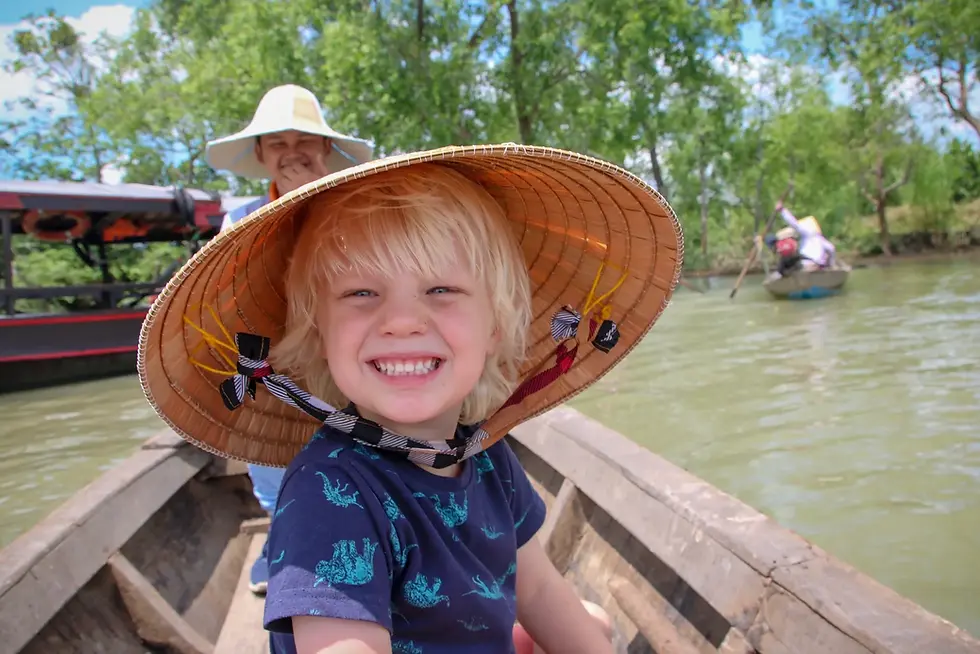
👉 Family with 5-year-old + second trip to Vietnam
→ North Vietnam (more cultural depth)
👉 Traveling in October
→ North Vietnam or South (NOT Central)
❓ Frequently Asked Questions: North vs Central Vietnam with a Baby or Toddler
Is Da Nang or Hanoi better with a baby?
👉 For most families, Da Nang is significantly easier than Hanoi.
Da Nang offers:
Wide pavements and beachfront promenades
Modern resorts and infrastructure
Short travel distances
Hanoi offers:
Cultural depth and historic atmosphere
But more traffic, narrow streets, and longer transfers
👉 Best choice for babies (0–2 years): Da Nang
Which part of Vietnam is best for toddlers?
👉 Central Vietnam - especially Da Nang and Hoi An - is the best overall region for toddlers.
Why:
Predictable daily routine (beach → rest → evening walks)
Short travel distances
Safe, walkable areas
👉 Toddlers do best where movement is easy and days are structured - Central Vietnam delivers this consistently.
Is North Vietnam too difficult with a baby?
👉 No - but it is more logistically demanding than Central Vietnam.
Challenges include:
Longer road transfers (3–6 hours)
Narrow pavements in Hanoi
Cooler winter temperatures
👉 It works well if:
You travel at a slower pace
You plan transport carefully
You use a car seat for all journeys
When should families avoid Central Vietnam?
👉 October and November are the most difficult months for Central Vietnam.
In Da Nang and Hoi An, this period can bring:
Heavy rain
Flooding (especially in Hoi An)
Limited beach time
👉 If traveling in these months, choose:
North Vietnam (Hanoi region), or
Southern destinations like Phu Quoc or Nha Trang
Do you need a car seat in Vietnam for babies and toddlers?
👉 Yes and it’s one of the most important safety decisions you’ll make.
In Vietnam:
Taxis and transfers do NOT provide car seats
Babies are often expected to sit on laps
Road conditions can be unpredictable
👉 For both North and Central Vietnam:
Use a car seat for all airport transfers and day trips
Arrange it before arrival
👉 It depends on the region.
👉 Best strategy:
Lightweight travel stroller
Combine with a baby carrier for flexibility
How many days do you need in North vs Central Vietnam with a baby?
👉 For a first trip:
Central Vietnam: 4–6 days (Da Nang + Hoi An)
North Vietnam: 5–7 days (Hanoi + Ha Long Bay)
👉 Central Vietnam works better for shorter trips due to:
Compact layout
Less travel time between locations
Is Vietnam a good destination for babies and toddlers overall?
👉 Yes - with the right planning, Vietnam is one of the most rewarding destinations in Asia for families.
Strengths:
Warm, welcoming culture
Excellent food options
Growing family-friendly infrastructure
Key to success:
Choose the right region
Plan around climate
Arrange baby equipment in advance
Should you bring or rent baby equipment in Vietnam?
👉 Most experienced families choose to rent locally.
Why:
Avoid airline damage and excess baggage
No need to carry bulky items
Equipment delivered to your hotel or airport
👉 Typical items to rent:
Stroller
Car seat
Travel cot
High chair
What is the biggest mistake families make when planning Vietnam?
👉 Choosing the wrong region for their travel dates.
Most common example:
Booking Da Nang in October → heavy rain + poor experience
👉 The second biggest mistake:
Not arranging baby equipment before arrival
🧾 Final Insight for Parents
👉 If you want the easiest, most predictable first trip with a baby or toddler:
Choose Central Vietnam
Travel in the dry season
Set up your equipment before you land
👉 That combination is what turns Vietnam from “challenging” into one of the best family travel experiences in Asia.
The Verdict

Central Vietnam is the better first choice for most international families with children under 4 - particularly in the dry season (February–August). The combination of Da Nang's practical infrastructure, the extraordinary daily rhythm it provides, Ba Na Hills as a world-class family activity, and Hội An's unparalleled evening atmosphere delivers more variety, more reliability, and more consistently positive conditions for young children than the north.
North Vietnam is the better choice for families visiting in autumn (October–November), for families who've already done the central coast and want a genuinely different Vietnam, and for children 4–6 who can fully engage with the cultural depth that Hanoi, Ha Long Bay, and the highland north uniquely offer.
The most honest answer: they are not competing choices. They are different chapters of the same extraordinary country. Do the right one first. Come back for the other.
🆚 North vs Central Vietnam
Easiest with babies: Central Vietnam
Best for first trip: Central Vietnam
Best in October–November: North Vietnam
Best for culture + landscapes: North Vietnam
Best all-round family experience: Central Vietnam
🧠 Why Trust This Guide
This guide is based on:
Supporting 5,000+ international families traveling across Vietnam
Real-world experience with baby logistics in Hanoi, Da Nang, Hội An, and beyond
Direct feedback from parents traveling with babies, toddlers, and young children
👉 Everything here is based on what actually works on the ground - not theory.
📲 Book Baby Equipment for North or Central Vietnam
KidEase Rentals delivers premium, safety-checked baby equipment across all of Vietnam - Hanoi, Da Nang, Hội An, and everywhere your itinerary takes you. One booking, one WhatsApp message, delivered before you arrive.
📲 WhatsApp: +84 7088 66447
📧 Email: admin@kidease-rentals.com
🌏 Vietnam Family Travel Blog Hub (Expert Guides for Parents)
🏙️ City & Destination Guides (Where to Go with a Baby)
🧭 Planning Your Vietnam Family Trip
🏡 Accommodation, Airbnb & Family Setup
🚗 Transport, Flights & Getting Around
🧸 Baby Gear, Strollers & Equipment
🛡️ Safety, Health & Practical Tips
KidEase Rentals - Vietnam's trusted baby and child equipment rental service for international families. 📞 +84 7088 66 447 | 📧 admin@KidEase-Rentals.com | Delivering across Vietnam


Comments