
Feeding Your Baby & Toddler in Vietnam: The Complete Parent Guide (2026)
Formula, street food, breastfeeding, supermarkets, sterilisation, and daily meal plans - everything you actually need to know
Food anxiety is the most underreported aspect of traveling with a baby or toddler in Vietnam. Parents worry about it constantly in the weeks before they travel - is the water safe? Can I find our formula brand? Can I breastfeed in a Vietnamese café? What can a 10-month-old actually eat here? - and then arrive to discover that Vietnam, once you know how to navigate it, is one of the most genuinely baby and toddler-friendly food environments in Southeast Asia.
This guide reduces that anxiety by replacing uncertainty with specific, honest, city-by-city knowledge. Not the generic "Vietnam has great food!" reassurance that fills most travel blogs. The actual answer to each question, with the specific brands, the exact supermarket names, the local terms, and the realistic daily plan.
"I'd spent weeks worrying about formula. We found NAN at the Lotte Mart in Da Nang on day one and never thought about it again. The cháo was better for her anyway."
- Daniella & Jethro R., Manchester, UK
⚠️ PARENT REALITY CHECK
The biggest feeding mistake in Vietnam isn’t exotic food.
It’s:
Using tap water without thinking
Assuming hotels provide baby gear
Feeding at the wrong time of day
👉 Fix those 3 things, and feeding becomes easy.
🚀 Vietnam Baby Feeding – Quick Start (30-Second Guide)
🚱 Use bottled water only (never tap water, anywhere)
🍼 Bring 1–2 weeks of formula (especially for Hội An & Phú Quốc)
🍚 Use cháo (rice porridge) as your safest local baby food
🌅 Eat street food only in the morning or early evening
🪑 High chairs are rare → plan feeding setup in advance
🧼 Use a UV steriliser or bottled water for hygiene

Feeding sorted? Now sort the gear. The highest-anxiety feeding moment in Vietnam is not finding formula - it's trying to feed a baby without a high chair. High chairs are rare in Vietnamese restaurants and almost non-existent in villas and Airbnbs. KidEase Rentals delivers the Stokke Clikk high chair directly to your hotel, resort or villa before you arrive.
🔑 Safe vs Risky: The Vietnam Feeding Hierarchy at a Glance
Before anything else - the framework experienced parents use to make feeding decisions in Vietnam instantly:
✅ Always safe:
Hot food served piping hot (just cooked, high heat)
Bottled or boiled water (label intact and sealed)
Freshly peeled fruit (you peel it, you see it)
Cháo (Vietnamese rice porridge) at any restaurant
Sealed packaged food from supermarkets
Breast milk (always and everywhere)
Formula made with bottled water
⚠️ Use judgement:
Raw vegetables in salads (busy, high-turnover restaurants: yes; quiet roadside stalls: rinse or skip)
Ice (always ask "đá đóng chai?" - bag ice made from purified water is generally fine in restaurants; crushed street ice is not)
Fruit from market stalls (wash with bottled water before peeling)
Grilled street food from busy, high-turnover stalls
❌ Avoid with babies and toddlers:
Tap water in any form (drinking, formula, rinsing bottles, brushing teeth)
Shellfish from low-turnover street stalls
Raw sprouts
Pre-cut fruit sitting in open air in heat
Ice from unknown sources
✅ PRO TIP - The Fruit Rule That Keeps It Safe
If you didn’t peel it yourself, don’t feed it to your baby.
Safe:
Banana
Mango
Papaya
Dragon fruit
👉 Wash with bottled water, peel yourself, and you’re completely safe
Safe Water & Sterilisation - The Foundation of Everything
This is the most important section in this guide. Tap water in Vietnam is not safe for adults or babies in any city, any hotel, any property. This applies in five-star resorts in Da Nang, in boutique hotels in Hội An, in luxury villas in Phu Quoc. The infrastructure varies; the rule doesn't.
✅ PRO TIP - Simplify Water Safety Completely
Treat all tap water in Vietnam as unsafe - no exceptions.
That means:
No drinking
No brushing teeth
No rinsing bottles
No washing feeding items
👉 Use bottled water for everything and you remove 90% of risk instantly
🚨 The Reality Most Parents Miss
Even if you boil tap water, you still need to handle bottles safely after sterilisation.That’s where most contamination actually happens.
👉 This is why most families use a UV steriliser in Vietnam - no water, no rinsing, no risk.
👉 Avoid water issues completely → Rent a UV steriliser in Vietnam
🚱 Reality vs Expectation: Water
Expectation: "A five-star resort in Vietnam surely has safe tap water." Reality: Even the finest resort properties in Vietnam use the municipal water supply for their taps. The water is treated but not to the standard required for infant consumption. Bottled water is the standard for all drinking, formula preparation, and bottle rinsing across all accommodation tiers.

For formula preparation
Use bottled water only. In Vietnam, bottled water is everywhere and extremely cheap - large 1.5L bottles of Aquafina, La Vie, or Dasani cost approximately 10,000–15,000 VND (under $1 USD). Most hotels provide 2 complimentary bottles per room per day - order additional supply from reception or buy from the nearest convenience store.
Boiling bottled water: for very young babies (under 4 months) or families who prefer to sterilise formula water, boiling bottled water in the hotel kettle and allowing it to cool is completely standard. If your room doesn't have a kettle, request one from reception - virtually all Vietnamese hotels will provide one.
The Baby Brezza Formula Pro Advanced: families who rent this through KidEase Rentals find it completely transforms nighttime feeds. It heats water to the precise temperature, measures the correct amount of powder, and produces a ready bottle in seconds - using bottled water poured into its reservoir. At 3am in a Nha Trang hotel room, this is not a luxury. It is sanity.
😴 3AM Reality Check
At home, night feeds are manageable.In a Vietnam hotel room, measuring powder, heating bottled water, and sterilising bottles at 3am is a completely different experience.
👉 The Baby Brezza removes every step - one button, perfect bottle in seconds.
👉 Make night feeds effortless → Rent a Baby Brezza in Vietnam
Sterilisation - what to do in Vietnam
The tap water rule applies to sterilisation too. You cannot use tap water for rinsing bottles after sterilisation in Vietnam. The practical approaches:
Option 1 - UV steriliser (the recommended approach for Vietnam):
The Haenim 4G UV steriliser or the Philips Avent UV steriliser work without water - UV light sterilises all surfaces in 3 minutes. No water setup, no boiling, no waiting. The steriliser sits on the hotel room desk; items go in, button pressed, done. For Vietnam specifically - where tap water is unusable and kettle-boiling takes time - UV sterilisation is the most practical approach by a significant margin.
The Philips Avent electric steam steriliser (also available) uses water from the reservoir - fill with bottled water, steam sterilises in 6 minutes. Effective but requires more bottled water usage.
Both are available through KidEase Rentals:
Option 2 - Sterilising tablets (Milton): dissolve in bottled water, submerge items for 15 minutes. No heat required. Good travel backup. Milton tablets are occasionally available in larger pharmacies in HCMC and Hanoi; bring a full supply from home.
Option 3 - Boil in kettle: bring bottles and teats to a full rolling boil in hotel kettle water for 5 minutes. Classic, effective, slightly cumbersome for frequent feeds.
💡 LOCAL HACK - Travel Sterilising Made Easy
If you’re out for the day:
Carry a small sealed container
Use pre-sterilised bottles from your room
Avoid rinsing anything outside
👉 Most parents prep everything in advance and avoid water contact entirely during outings
Sterilising on the go? Rent a UV steriliser through KidEase Rentals and have it waiting in your hotel room before you land. No tap water required. Delivered, collected, no hassle.
📲 WhatsApp: +84 7088 66447
Formula & Baby Food Availability - City by City
🏙️ Ho Chi Minh City (Saigon)
HCMC has the best international formula and baby food availability in Vietnam. If you're arriving through Tan Son Nhat Airport and continuing to other destinations, stock up here first.
Best stores for formula:
BigC Hoàng Văn Thụ (District Tân Bình, near the airport): large, well-stocked, dedicated baby section. Aptamil, NAN, Enfamil, Dielac, Friso regularly available
Lotte Mart District 7 (Phú Mỹ Hưng): the most consistently international-stocked supermarket in HCMC. Aptamil Gold, NAN HA (hypoallergenic), HiPP Organic occasionally available, Heinz baby food pouches
Aeon Mall Bình Dương / Aeon Mall Tân Phú: Japanese-managed supermarket with strong baby section; Morinaga (Japanese formula), Meiji, Glico - excellent for Japanese families
Vinmart (multiple locations): reliable for Vietnamese brands (Vinamilk, Dielac) and some international; less reliable for Aptamil and HiPP
Circle K / FamilyMart: Pampers, basic baby wipes, limited Vietnamese formula only
What you'll reliably find in HCMC: Aptamil (all stages), NAN (all stages), Enfamil, Friso, Dielac, Vinamilk. Baby food: Heinz jars (some BigC locations), HiPP pouches (Lotte Mart District 7 - inconsistent), Ella's Kitchen (rare but occasionally Lotte Mart District 7).
🏛️ Hanoi
Hanoi's international baby supply is strong but slightly less comprehensive than HCMC.
Best stores:
BigC Hà Nội (Đống Đa): large format, good baby section, Aptamil and NAN reliable
Lotte Mart Đống Đa: international section with Morinaga, Meiji for Japanese families; NAN, Friso regular
Vinmart+ (multiple locations across Old Quarter and Tây Hồ): convenient but limited to Vietnamese brands plus NAN
Aeon Mall Long Biên: east of the Old Quarter, large international food section
Japanese supermarket Fuji Mart (Tây Hồ area): specifically for Japanese families - Morinaga, Pigeon, Japanese teething foods, natto for adventurous toddlers
Pharmacy chains (Pharmacity, Long Châu, An Khang): distributed throughout Hanoi tourist areas; reliably stock Aptamil and NAN; good for children's paracetamol and infant ibuprofen.

🏖️ Da Nang
Da Nang's supply is good and improving rapidly.
Best stores:
BigC Da Nang (255 Hùng Vương, Hải Châu): the largest supermarket in the city; Aptamil, NAN, Friso; baby food pouches (Heinz); good fresh produce section for toddler meal prep
Lotte Mart Da Nang (6 Nại Nam, close to Da Nang airport): good international baby section; NAN, Dielac, some Aptamil
Co.opMart Da Nang (multiple branches): good for Vietnamese brands and Friso; some international pouches
Vinmart+ (beachfront area): convenient for nappies and emergency formula; limited brand selection
Parent tip: stock up at BigC on day one in Da Nang before heading to Hội An or Hue. Both destinations have significantly more limited supply.
🏮 Hoi An
Hội An is a small town. The supply situation reflects this honestly.
What's available:
Small supermarkets near Chợ Hội An (Hội An Market) carry Vietnamese formula brands (Dielac, Vinamilk) and some Friso
Circle K and convenience stores near the Ancient Town stock Pampers and basic Vietnamese formula
Go! Mart (outside the Ancient Town area): the best local option; limited international range but more complete than convenience stores
The honest reality: if your baby is on Aptamil, HiPP, or Enfamil, bring your full Hội An supply from Da Nang. Do not rely on finding it locally.
🌊 Nha Trang
Best stores:
Maximark (38 Nguyễn Thiện Thuật): the most comprehensive supermarket in Nha Trang; Aptamil and NAN reliably stocked; some baby food pouches; good pharmacy section
Nha Trang Center Mall (20 Trần Phú, right on the boulevard): Lotte Mart inside; reasonable international baby selection
Vinmart+ (multiple on the beachfront strip): nappies and Vietnamese formula reliably; Aptamil inconsistently
Parent tip: stock up at Maximark within the first 24 hours in Nha Trang. The resort area convenience stores near the big hotels carry limited stock at premium prices.
🏝️ Phu Quoc
Phu Quoc is an island. The supply chain is the most limited of all major Vietnamese destinations.
What's available:
Vinmart Dương Đông (central Dương Đông town): Vietnamese formula brands reliably; NAN occasionally; Aptamil very inconsistently
Resort shops: overpriced and limited; good for emergency nappies; unreliable for formula
Local pharmacies (Dương Đông town): some Vietnamese formula; children's medications
The honest reality: bring your full formula supply for Phu Quoc. This is non-negotiable advice. Do not arrive on Phu Quoc relying on finding your preferred brand. If you're flying from HCMC, buy your full Phu Quoc supply at BigC or Lotte Mart before boarding the domestic flight.
🌅 Mũi Né / Vũng Tàu / Ho Tràm
All three are resort areas with limited local supply. Co.opMart Mũi Né covers basics. Vũng Tàu has a BigC (30 Đường 3/2) with reasonable supply. Hồ Tràm: resort shops only; bring everything from HCMC.
Finding Formula in Vietnam
Do you have your preferred formula brand?
├── YES → Bring at least 2 weeks' supply from home; treat local availability as backup
└── NO → Can you switch to Vietnamese/international brands?
    ├── YES → Dielac, Vinamilk, Friso, NAN available in all cities
    └── NO → Stock up in HCMC or Hanoi first, then bring supply to destination
                    ├── Phu Quoc: bring FULL supply, no exceptions
                    ├── Hội An: bring full supply from Da Nang
                    └── Nha Trang: Maximark has Aptamil; verify on arrival day 1
Breastfeeding in Vietnam - Culture, Privacy & Practical Tips
Is it acceptable to breastfeed in public in Vietnam?
Yes - with some cultural nuance. Vietnamese culture is supportive of breastfeeding; it is common and normalised in family contexts. However, the specific Western convention of openly nursing in any public space without any covering is less common culturally.
The practical reality: Vietnamese women typically breastfeed with a light cloth cover or by turning slightly away from others. This is not a strict cultural rule - it is simply a local norm around privacy. Most café and restaurant staff in tourist areas are completely comfortable with a nursing mother and will often offer a quiet corner or seat facing away from the busiest area if asked.
Where breastfeeding is completely comfortable:
Your hotel room, resort villa, or Airbnb (obviously)
Resort poolside (common and normal)
Any café with outdoor seating (face away from the busiest walkthrough)
Restaurant tables in the tourist districts of HCMC, Hanoi, Da Nang, and Hội An - especially those with booths or corner tables
Hotel lobbies (particularly international hotels)
Museum and attraction rest areas
Where more discretion is worth exercising:
Inside active temple or pagoda complexes (modest behaviour is expected for all visitors)
Busy market areas with very limited seating - use a carrier to facilitate discreet nursing while moving
Local Vietnamese restaurants with primarily Vietnamese clientele - not unwelcome, but a light cover is appreciated
Practical breastfeeding tips for Vietnam
A nursing cover or large muslin: brings from home. Lightweight, packs to nothing, provides privacy wherever you want it. Muslin swaddle cloths (3–4 of which you should bring regardless) double as covers when needed.
The carrier: an Ergobaby Omni Breeze or similar soft structured carrier is a discreet nursing option while moving through markets, temples, and tourist areas. With practice, this becomes completely comfortable and allows full mobility.
Staying hydrated: breastfeeding in tropical heat requires significantly increased fluid intake. Vietnam's heat and humidity can reduce milk supply if hydration isn't maintained. Carry a water bottle always; coconut water (from sealed cartons or fresh green coconuts - the water inside is safe) is an excellent natural electrolyte drink available everywhere.
Heat and supply: some mothers find that extreme heat (days above 35°C) and high humidity affect milk production. The midday retreat that experienced Vietnam parents build into every day - returning to air-conditioned accommodation from 10am to 4pm - helps manage this. The Stokke YOYO3 with its full UPF 50+ canopy creates a shaded space for nursing in a carrier while on the move in the mornings.
Vietnamese café culture: the Vietnamese café culture of sitting for long periods with a drink (either cà phê sữa đá - iced coffee with condensed milk - or sinh tố - fresh fruit smoothie) is one of the most nursing-friendly environments you'll find in Asia. Small, slightly dim, unhurried, with attentive staff who will refill water without being asked. Almost every neighbourhood in every Vietnamese city has a good Vietnamese café within 100m.
"I was nervous about breastfeeding in Vietnamese cafés. Needlessly so. Every single place I nursed Fionn, someone brought me extra water without being asked. Vietnamese hospitality toward babies is genuinely overwhelming."
- Siobhan & Lucas D., Sydney, Australia
🔁 Reality vs Expectation: Breastfeeding
Expectation: "I'll have to hide in toilet cubicles to nurse in Vietnam." Reality: Vietnamese culture is warm, accommodating, and genuinely welcoming of nursing mothers. You will not be asked to stop. You may be offered better seating. You will almost certainly be given extra water.
Street Food Safety - The Hierarchy Parents Need
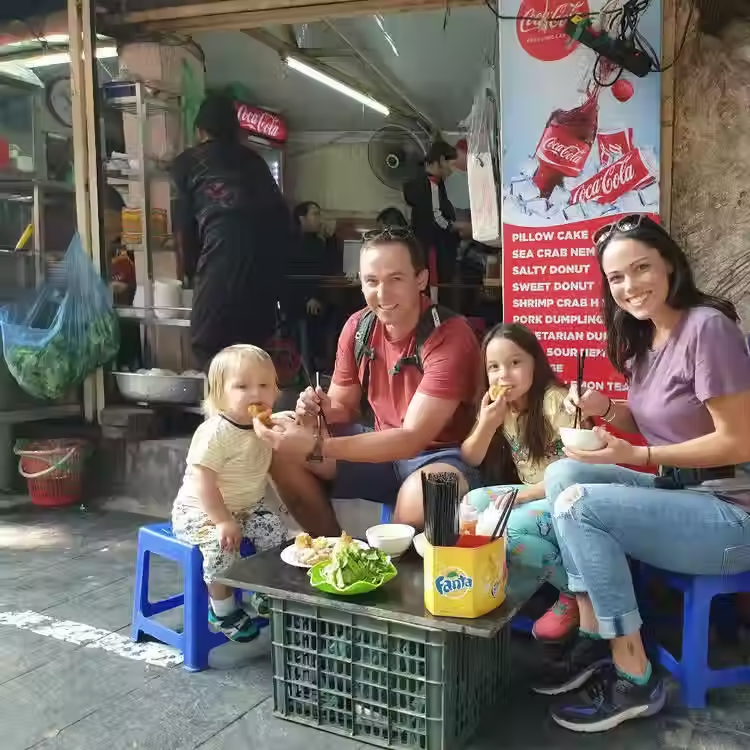
Vietnam's street food scene is one of the most extraordinary in the world. Parents who navigate it wisely eat spectacularly well. Parents who ignore basic safety rules can have a very difficult 24 hours.
The time-of-day strategy: Vietnam is not just what - it's when
This is the most underrated insight for parents eating street food in Vietnam with young children.
The golden rule: eat where the Vietnamese eat, at the time the Vietnamese eat.
Vietnamese street food is safest - and best - in the morning (6–10am) and at the first evening service (5:30–7pm). Here's why:

Morning (6–9am): Vietnamese breakfast culture is intense and very food-safe. Pho, bún bò Huế, bánh mì, cháo - these are all served piping hot, made fresh, and consumed by thousands of Vietnamese every morning. The turnover is so rapid that nothing sits. The broth has been simmering since 4am. The bread has just been baked. This is the safest and best time to eat street food in Vietnam with a baby or toddler.
Early evening (5:30–7pm): the first service of the evening is similarly safe - fresh ingredients, high turnover, hot cooking temperatures. By 8pm, some ingredients have been sitting for hours; by 9pm at busy venues the safety is still generally fine but the argument for fresh begins to weaken.
Danger zone for young children: midday (11am–2pm). In the 30–38°C heat of a Vietnamese midday, food that has been sitting for more than 45 minutes at room temperature - pre-cut fruit, pre-made rolls, lukewarm soup - can be problematic. Apply extra caution during the hottest part of the day.
⚠️ PARENT WARNING - Midday Is the Risk Window
Between 11am–2pm, food sits in extreme heat (30–38°C) and turnover slows.
That means:
Pre-cooked food may have been sitting too long
Bacteria growth increases rapidly
Even “safe” dishes become higher risk
👉 If you’re feeding a baby or toddler: Avoid street food at midday - wait for morning or early evening
The safe street food checklist
Use this before ordering from any street vendor with a baby or toddler:
Green light signals:
✅ The stall is busy - high turnover means fresh food
✅ Food is cooked to order in front of you at high heat
✅ The vendor handles money with one hand and food with another (using gloves or tongs)
✅ The soup/broth is visibly boiling or freshly poured
✅ Other Vietnamese families with children are eating here
✅ It is morning (6–10am) or early evening (5:30–7pm)
Approach with caution:
⚠️ Pre-cooked items sitting in the open air at ambient temperature
⚠️ Pre-cut fruit displayed without cover
⚠️ Ice of unknown origin in drinks
⚠️ Midday, low-turnover stall
Skip entirely for children under 2:
❌ Raw shellfish (oysters, clams from low-turnover stalls)
❌ Salads with raw sprouts
❌ Pre-cooked egg dishes sitting at room temperature
❌ Anything that doesn't smell completely fresh
The best street foods for babies and toddlers by city
Ho Chi Minh City:
Cháo (rice porridge) from any morning stall or restaurant - order cháo gà (chicken) or cháo cá (fish) for babies from 7 months; universally the safest baby food in Vietnam
Bánh mì from Bánh Mì Huỳnh Hoa (District 1) or any busy, high-turnover bánh mì stall - adjust filling to mild (avoid pâté for babies under 12 months)
Bún bò Huế at morning stalls - order the broth without chilli for toddlers
Steamed corn from evening market vendors - universally loved by toddlers
Hanoi:
Phở gà (chicken pho) - one of the greatest toddler foods in the world; mild, nutritious, always piping hot
Bún chả (grilled pork with noodles and dipping broth) from a morning stall - order without chilli; the noodles and pork are both toddler-appropriate
Bánh cuốn (steamed rice rolls with minced pork) - soft, mild, and extraordinary for children who eat them almost on sight
Da Nang / Hội An:
White rose dumplings (Bánh Vạc) - Hội An exclusive; steamed, mild, perfect texture for toddlers from 12 months
Mì Quảng (turmeric noodles with pork or prawn) - adjust to mild; one of the most toddler-successful dishes in central Vietnam
Bánh xèo (sizzling crêpe) - eat the filling; the crispiness is a texture revelation for toddlers 18 months+
Nha Trang:
Bánh canh chả cá (thick noodle soup with fish cakes) - Nha Trang's signature dish; the thick udon-like noodles are the perfect toddler food; order without chilli
Fresh grilled seafood - at any busy beachfront restaurant; prawns broken into small pieces work from 12 months+
Fresh coconut - the water from a young green coconut is the best natural toddler drink in Vietnam; available everywhere
Phu Quoc:
Bún quậy - Phu Quoc's unique noodle dish; mild crab and seafood broth; noodles are thin and manageable from 15 months
Grilled fresh squid - at Hàm Ninh fishing village (east coast); the freshest seafood available anywhere on the island
Ripe mango from market - peel yourself; Dragon fruit, mangosteen (in season), rambutan - all appropriate from 8 months+ mashed or in small pieces
Can My Baby Eat This Street Food?
Is the food hot and freshly cooked?
├── YES → Is your baby over 6 months?
│   ├── YES → Is it mild (no chilli, no raw shellfish)?
│   │   ├── YES → ✅ Safe to try in small amounts
│   │   └── NO → Modify the order or choose something else
│   └── NO (under 6 months) → Stick to breast milk, formula, or cháo only
└── NO (pre-cooked, room temperature) → What time is it?
    ├── Morning (6–10am) at a busy stall → ⚠️ Probably fine; use judgement
    └── Midday or evening at a quiet stall → ❌ Skip
Restaurant Hacks - High Chairs, Kid Menus, and Modifications
The high chair reality across Vietnam
This cannot be overstated: high chairs are rare in Vietnamese restaurants across all categories - local restaurants, mid-range eateries, and many resort hotel restaurants. The practical approach that works:
Rent a Stokke Clikk high chair from KidEase Rentals for all in-accommodation meals (breakfast, in-room dinners, villa lunches)
Bring a portable clip-on booster for restaurant use from approximately 6 months (when baby can sit with support and has full head control)
Accept that some restaurant meals will be on your lap - this happens in Vietnam, particularly in local restaurants, and is perfectly manageable
⚠️ PARENT WARNING - Most Restaurants Don’t Have High Chairs
Even in:
Tourist areas
Mid-range restaurants
Some hotels
High chairs are:
Rare
Inconsistent
Often unavailable when you need them
👉 Plan your feeding setup before you arrive - don’t rely on finding one
The Meal That Breaks Parents
You’ve ordered. The food arrives.Your baby has nowhere to sit.
No high chair. No support. No safe feeding position.
Now you’re:
juggling hot food
holding a moving toddler
trying to avoid a full meltdown
This happens every single day in Vietnam.
✅ The Simple Fix
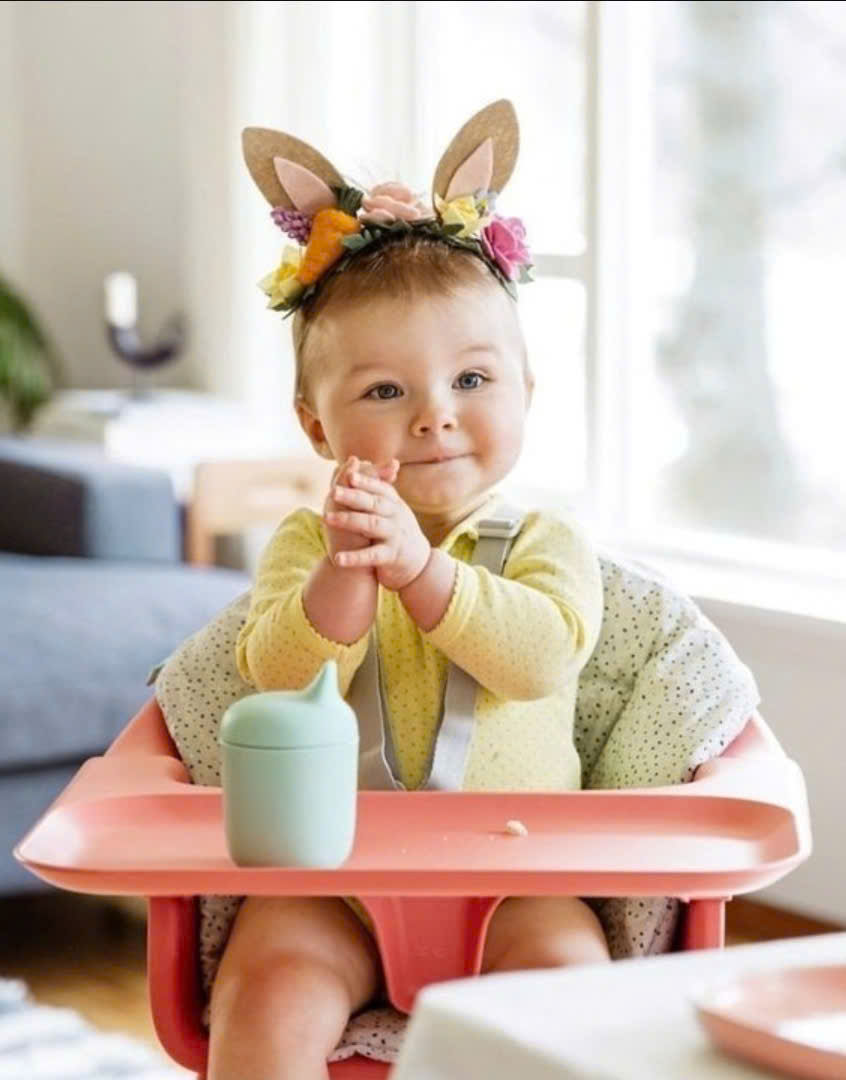
👉 A Stokke Clikk high chair, delivered to your accommodation before arrival.
Proper sitting position
Safe, structured meals
No stress
👉 Avoid lap-feeding chaos → Rent a high chair in Vietnam
How to request modifications
The Vietnamese phrase that solves most toddler food problems: "Không cay" (không = not, cay = spicy). Pronounced approximately "Khong Kai." Point at your child, say "không cay" before ordering, and virtually every Vietnamese restaurant will adjust accordingly.
Other useful phrases:
"Ít muối" (less salt) - useful for babies under 12 months who should have minimal sodium
"Không có MSG" (no MSG) - requested by some parents; note that MSG has been widely used in Vietnamese cooking for decades and is not harmful for toddlers in normal quantities, but some parents prefer to avoid it
"Cháo không?" (Do you have rice porridge?) - the magic phrase that gets a baby-appropriate meal at virtually any Vietnamese restaurant that isn't exclusively a western café
💡 LOCAL HACK - One Phrase That Changes Everything
Say “không cay” (no spice) while pointing to your child before ordering.
In most Vietnamese kitchens, this will:
Remove chilli completely
Adjust sauces automatically
Make dishes toddler-friendly without explanation
👉 You don’t need to explain - just say it early and clearly
The best family restaurant experiences by city
HCMC: Morning Glory Restaurant (Hội An - also HCMC branch), The Deck (District 2, riverside), Cục Gạch Quán (central HCMC - Vietnamese traditional, spacious tables, staff experienced with families)
Hanoi: Chả Cá Lã Vọng (the definitive Hanoi experience for families with children 4+), Bún Chả Hương Liên (Obama's bún chả - busy, warm, casual, perfect for toddlers), Little Hanoi Restaurant (tourist area, English menus, family-friendly)
Da Nang: Madame Lân (multiple branches, spacious, good for strollers), the promenade strip restaurants (Phạm Văn Đồng Street) are reliably relaxed about families
Hội An: Morning Glory Restaurant (Hội An's most celebrated family-friendly Vietnamese restaurant), Streets Restaurant Café (calm, good for families with young children), the riverside restaurants on Bach Dang Street at early evening
Nha Trang: Louisiane Brewhouse (beachfront, spacious, reliably good), Sailing Club (excellent for families), Lac Canh (loud, casual, perfect for toddler meltdown resilience)
Phu Quoc: The Pepper Tree, resort hotel restaurants at early evening (6–7pm) before they peak
The High Chair Moment
You're in Hội An. It's 6:30pm. You've found the perfect riverside table. You ask for a high chair. They don't have one.
This moment - which happens to families every day across Vietnam - is completely preventable. A Stokke Clikk high chair from KidEase Rentals, delivered to your villa or hotel before you arrived, means every in-accommodation meal is comfortable. The restaurant lap-meals become the exception, not the norm.
👉 High chair rental in Hội An · Da Nang · Phu Quoc · Nha Trang · HCMC
Allergies & Special Diets
Nut allergies
Vietnamese cuisine uses peanuts extensively - in dipping sauces, as garnishes, crushed into dishes, and in many bánh dishes. This is the most important allergy concern for families visiting Vietnam.
The specific risk foods: bún bò Huế (some recipes), bánh xèo (peanuts in dipping sauce), bánh mì (some include peanut paste), Hội An's white sesame and peanut sweet treats at market stalls, many barbecue dipping sauces.
The phrase for nut allergy: "Con tôi bị dị ứng lạc / đậu phộng" (my child is allergic to peanuts). Show this written on your phone in Vietnamese - Google Translate offline works in Vietnam.
Safe street foods for nut allergies: plain cháo, phở (plain broth and noodles), boiled rice with steamed vegetables, fresh fruit you peel yourself, plain grilled chicken or fish.

Dairy
Vietnam's cuisine is largely dairy-free in its traditional form (Chinese-influenced cooking traditions don't use dairy; French colonialism introduced condensed milk and yoghurt). Most Vietnamese restaurant food is safe for dairy-avoiding families with notable exceptions: bánh mì in tourist areas often contain imported butter or cheese, and some modern cafés use dairy extensively in their drinks and desserts.
Vietnamese dairy items to check: cà phê sữa (coffee with condensed milk), sữa chua (Vietnamese yoghurt - widely available, good for toddlers from 12 months who tolerate dairy), various French-influenced pastries.
Gluten
Most Vietnamese street food staples - phở noodles (rice-based), bún (rice vermicelli), cháo (rice porridge), cơm (steamed rice), bánh cuốn (rice rolls) - are gluten-free. The main Vietnam gluten risks: soy sauce (used as dipping condiment; choose tamari if available), wheat-based noodles (mì - ask to confirm it's rice noodles if concerned), bánh mì bread.
🚨 Worst Case Scenario Planning: Food-Related
Scenario 1: Baby has diarrhoea
First 24 hours: oral rehydration salts (Oresol - available at every Vietnamese pharmacy as Oresol sachets; dissolve in bottled water to the exact measurement on the packet). Keep feeding breast milk or formula normally - do not reduce feeds. Offer boiled rice water (from cooking rice in extra water - the starchy liquid is soothing and hydrating). Do not stop breastfeeding.
When to see a doctor: blood in stool, fever above 38.5°C in a baby under 3 months (any fever is urgent), signs of dehydration (sunken fontanelle, no wet nappies for 6+ hours, sunken eyes), vomiting that prevents oral rehydration.
Finding medical help:
HCMC: FV Hospital (District 7) or Family Medical Practice (District 3) - English-speaking paediatricians, 24-hour
Hanoi: Vinmec International Hospital (Times City), Family Medical Practice
Da Nang: Vinmec Da Nang, Family Medical Practice Da Nang
Hội An: local clinics only - serious illness, go to Da Nang (30 minutes)
Nha Trang: Vinmec Nha Trang (Trần Phú boulevard)
Phu Quoc: Dương Đông clinic for minor illness; medical evacuation to HCMC for serious situations

Scenario 2: Baby refuses all local food
This is common during the first 24–48 hours of a trip as babies adjust to new environments. Maintain breast milk or formula normally. Offer foods with familiar textures (rice, banana, mild broth). Cháo is the closest thing to a universal reset food - mild, warm, familiar in texture to most baby porridges. Do not introduce new foods during adjustment; return to familiar foods until the baby is eating confidently again.
✅ PRO TIP - The 48-Hour Reset Rule
It’s completely normal for babies to refuse food for the first 24–48 hours in Vietnam.
Don’t panic.
Keep milk feeds consistent
Offer familiar textures
Avoid introducing new foods
👉 Most babies reset naturally within 2–3 days
Scenario 3: Formula runs out unexpectedly
In HCMC, Hanoi, Da Nang, Nha Trang: go immediately to BigC, Lotte Mart, or Maximark. Aptamil and NAN are likely available in the right stage. In Hội An: take a Grab to BigC Da Nang (30 minutes). In Phu Quoc: check Vinmart first; if unavailable, contact your resort concierge who may be able to source from the mainland within 24 hours. Breast milk is always the emergency backup if the baby is still breastfeeding.
"Our daughter point-blank refused everything for 36 hours after we landed. Just wanted breast milk and nothing else. We gave her exactly that, kept the routine, and on day three she ate an entire bowl of cháo gà and then pointed at mine. Vietnam sorted itself out."
- Anna & Markus K., Munich, Germany
Sample Daily Meal Plans by Age
These are practical frameworks - not rigid prescriptions. Adapt to your child's needs, what's available, and what's working on any given day.
🍼 Age 0–6 months: breast milk or formula only
The only appropriate nutrition for babies under 6 months is breast milk or formula. Vietnam doesn't change this. Your daily feeding plan in Vietnam is identical to your daily feeding plan at home - with the water precaution (bottled water only for formula) and the sterilisation approach (UV steriliser strongly recommended).
The Vietnam-specific addition: feed on demand and increase frequency in the heat. The first 48–72 hours in tropical heat often produces increased feeding demand as babies regulate temperature through hydration.
Daily equipment: steriliser running through the day (UV steriliser handles 3-minute cycles on demand), formula machine or kettle + bottled water setup, nursing cover for public outings.
🥣 Age 6–12 months: introducing solids in Vietnam
This is the most flexible and most exciting age to be introducing solids in Vietnam. The local food is genuinely extraordinary for this developmental stage - and better aligned with what weaning babies need than many parents expect.

Sample day (7 months, well-established on solids):
6:30am: breast milk or formula feed
7:30am beach or morning walk: watermelon puree or mango puree in a pouch (bought at BigC; or peel and mash fresh from market fruit)
8:30am: return to accommodation; breakfast: plain cháo (rice porridge) with a very small amount of chicken - the perfect weaning texture, available at any local restaurant
10am: breast milk or formula
12pm (midday): nap after lunch; before nap: steamed rice mashed with mild broth from phở (the clear chicken broth from a phở restaurant is excellent for this); OR pureed sweet potato from a local market (steam in hotel kettle)
2:30pm: breast milk or formula
4:30pm: snack: ripe banana (mashed or in finger food strips from 8 months); or mango pieces; or papaya mashed
6:30pm: dinner: cháo again, or steamed rice with fish (flaked from any restaurant fish dish), or Heinz jar if available
Bedtime: breast milk or formula
The universal Vietnam weaning food: cháo gà (chicken rice porridge). Order at any Vietnamese restaurant. It arrives as a thin, warm, porridge-like consistency of rice cooked to complete softness with shredded chicken throughout. It is the most appropriate, most available, and most appreciated weaning food in Vietnam. Most Vietnamese restaurants that aren't exclusively western cafés will have it. The three Vietnamese words you need: "Cháo gà, không cay" (chicken porridge, not spicy).
✅ PRO TIP - The One Food That Always Works
If you’re unsure what to feed your baby anywhere in Vietnam, order cháo gà (chicken rice porridge).
Always freshly cooked
Always served hot
Easy to digest
Available in almost every local restaurant
👉 When everything else feels uncertain, cháo is your default safe option
🍜 Age 12–24 months: toddler eating in Vietnam
The good news: this is the age that Vietnamese food serves best. Noodle soups, rice dishes, steamed dumplings, grilled meats, fresh fruit - almost everything on a Vietnamese restaurant menu can be adapted for a 15-month-old with minimal modification.
Sample day (16 months, confident toddler eater):
6:30am beach morning: small container of banana pieces from hotel fruit; a few rice crackers
8am breakfast: bánh cuốn (steamed rice rolls with minced pork) OR cháo gà at a morning restaurant; water from sealed bottle
9:30am: return to accommodation; formula or cow's milk if weaned; small snack
11am nap: after light snack
1pm lunch (in accommodation with high chair): steamed rice from the previous evening's leftovers (Vietnamese restaurants will usually give you a take-away container) with shredded chicken; OR baby food pouch from BigC; fresh mango pieces
3:30pm: pool time; coconut water from sealed carton (widely available, excellent electrolytes); banana
5:30pm restaurant: Hội An: white rose dumplings (say "bánh vạc" + "không cay"); Da Nang: mì Quảng noodles without chilli; Nha Trang: bánh canh chả cá; HCMC: phở gà
Bedtime: formula or cow's milk
🍱 Age 2–4 years: the great Vietnam food adventure
By 2 years, Vietnamese street food and restaurant food becomes a genuine daily adventure rather than a logistics exercise. The child can communicate what they want, has established tastes, and can handle more texture and variety.
Sample day (3 years):
6:30am market visit: fresh Vietnamese breakfast at the morning market - bánh mì with chicken and mild fillings; or a small bowl of phở gà
8am beach: grilled corn from a beach vendor at approximately 8am (the best corn stalls are on the beach in the morning, fresh from the early market)
9:30am accommodation: fruit: dragon fruit cut at the room, rambutan from the market bag, or mangosteen if in season (May–September)
12pm in accommodation (with high chair): leftover rice from dinner; or room service Vietnamese chicken rice (cơm gà) - the most reliable room service toddler meal in any Vietnamese hotel
3pm pool snack: sealed fruit juice or coconut water; rice crackers from a convenience store
5:30pm restaurant: white rose dumplings + cơm gà (chicken rice) in Hội An; bánh xèo (sizzling crêpe) filling in Da Nang; bún bò Huế broth (không cay) with rice noodles in Hue; bánh canh chả cá in Nha Trang
After dinner: grilled corn from an evening market vendor - always the dessert of choice
"Our 3-year-old Tomás tried every single thing we put in front of him in Vietnam. He ate white rose dumplings in Hội An, bún bò broth in Hue, phở for breakfast in Hanoi, and fresh crab in Phu Quoc. He's now the most adventurous eater in his nursery class."
- Isabella & Oscar V., Barcelona, Spain
Gear That Makes Feeding in Vietnam Easy
The right equipment transforms feeding from a daily negotiation into a straightforward routine. Here is what KidEase Rentals delivers that directly affects the feeding experience:
🍽️ High Chair (Stokke Clikk)
Tool-free assembly in 60 seconds. Dishwasher-safe tray - essential when baby food residue builds up in tropical heat. 3-point harness. Compact footprint for hotel rooms, villa terraces, and balconies. The single most impactful feeding rental for any family in Vietnam.

Suitable from approximately 6 months (full head control, sitting with support) to approximately 4 years / 15kg.
👉 High chair rental in Ho Chi Minh City · Hanoi · Da Nang · Hội An · Nha Trang · Phu Quoc · Nationwide
🧪 UV Steriliser (Haenim 4G / Philips Avent)
No water required. Sterilises in 3 minutes. Sits on the hotel room desk. Handles bottles, teats, dummies, breast pump parts, and any item that needs to be sanitised during a Vietnam trip. The solution to the tap water sterilisation problem.
🍼 Baby Brezza Formula Pro Advanced
Automatic formula machine. Fills with bottled water from the reservoir. Produces the correct formula at the perfect temperature in seconds. For formula-feeding families with babies under 12 months, this is the most appreciated rental item of any Vietnam trip - particularly for nighttime feeds.
🤱 Breast Pump (Medela / Spectra / Philips Avent)
All models available for rent. Spectra S1/S2 is the best and quietest option for hotel room pumping at night. All accessories (shields, tubes, bottles) provided clean and new or fully sterilised.
❓ Feeding Your Baby in Vietnam – Frequently Asked Questions
Is it safe to feed my baby in Vietnam?
Yes - if you follow a few key rules. Stick to freshly cooked hot food, bottled or boiled water, sealed packaged items, and fruit you peel yourself. Avoid tap water, pre-cut fruit, and food sitting in heat. Vietnam is actually one of the most baby-friendly food environments in Southeast Asia once you understand these basics.
Can I use tap water for baby formula in Vietnam?
No. Tap water is not safe anywhere in Vietnam, including luxury hotels and resorts.Always use:
Bottled water (Aquafina, La Vie, Dasani)
Or boiled bottled water for young babies
This applies to:
Formula preparation
Washing bottles
Brushing teeth
Rinsing feeding equipment
How do I sterilise baby bottles in Vietnam?
You have three realistic options:
Best option: UV steriliser (no water needed, fastest, most practical)
Steam steriliser using bottled water
Milton tablets with bottled water
Boiling in a kettle works, but it’s slower and less convenient for frequent feeds.
👉 Most parents rent a UV steriliser to avoid water issues entirely.
Is baby formula available in Vietnam?
Yes - but availability depends on the city:
Ho Chi Minh City & Hanoi: Excellent availability (Aptamil, NAN, Enfamil, HiPP occasionally)
Da Nang & Nha Trang: Good, but stock up early
Hoi An & Phu Quoc: Limited - bring your own supply
👉 Critical rule:If your baby depends on a specific formula, bring at least 1–2 weeks’ supply from home.
What baby food can I easily find in Vietnam?
You’ll find:
Cháo (Vietnamese rice porridge) – the best local baby food
Fresh fruit (banana, mango, papaya)
Supermarket pouches (Heinz, HiPP in major cities)
Yogurt (for 12+ months)
Cháo is available almost everywhere and is perfect for babies from 6 months+.
Can my baby eat Vietnamese street food?
Yes - if you choose carefully.
Safe choices:
Freshly cooked hot meals
Pho, cháo, noodle soups
Grilled meats from busy stalls
Avoid:
Food sitting out in heat
Raw sprouts
Pre-cut fruit
Unknown ice
👉 Best time to eat street food: morning (6–10am) or early evening
Is breastfeeding acceptable in public in Vietnam?
Yes. Breastfeeding is normal and widely accepted.
However, local mothers tend to:
Use a light cover
Sit slightly turned away
You won’t be challenged - and often staff will:
Offer better seating
Bring extra water
Where can I breastfeed comfortably in Vietnam?
Best places:
Cafés (very relaxed culture)
Restaurants (especially tourist areas)
Hotel lobbies
Resort pool areas
Use more discretion in:
Temples
Busy markets
Small local eateries
Are high chairs available in restaurants in Vietnam?
No - this is one of the biggest surprises for parents.
High chairs are:
Rare in local restaurants
Inconsistent in hotels
Almost never available in Airbnbs or villas
👉 This is why most families rent a high chair for their stay.
Do hotels or Airbnbs provide baby feeding equipment?
Generally, no.
You should not expect:
High chairs
Sterilisers
Bottle warmers
Formula machines
👉 Families typically rent these in advance for delivery to their accommodation.
What’s the easiest way to feed a baby while traveling in Vietnam?
The simplest setup:
High chair for accommodation meals
UV steriliser for hygiene
Bottled water for everything
Cháo + simple local foods for solids
This removes 90% of feeding stress.
What should I do if my baby gets diarrhoea in Vietnam?
Immediate steps:
Use oral rehydration salts (Oresol from any pharmacy)
Continue breast milk or formula
Offer simple foods like rice or cháo
Seek medical help if:
Fever (especially under 3 months)
Signs of dehydration
Blood in stool
Is food poisoning common for babies in Vietnam?
Not if you follow the rules.
Most issues come from:
Tap water exposure
Midday street food
Poor hygiene handling
Stick to the safe food hierarchy, and risk is low.
What if my baby refuses food in Vietnam?
This is very common in the first 24–48 hours.
Do:
Continue milk feeds
Offer familiar foods
Use cháo as a reset
Most babies adjust within a few days.
Can I find baby snacks and essentials easily?
Yes in cities, less so in resort areas.
Available:
Rice crackers
Yogurt
Fruit
Basic baby snacks
Limited in:
Hoi An
Phu Quoc
Ho Tram / Mui Ne
👉 Stock up early.
What feeding equipment should I bring vs rent?
Bring:
Formula (if brand-specific)
Small essentials (bottles, utensils)
Rent in Vietnam:
High chair
UV steriliser
Formula machine
Breast pump
👉 Renting avoids luggage overload and solves local availability issues.
Is it worth renting a high chair in Vietnam?
Yes - for most families, it’s the single most useful item.
Without one:
Meals become stressful
You rely on lap feeding
Hygiene becomes harder
With one:
Structured mealtimes
Cleaner feeding
More relaxed parents
How do I arrange baby equipment before arriving?
Most families use:
WhatsApp for fastest booking
Delivery directly to hotel or villa
Setup ready before arrival
This removes the need to search locally after landing.
🎯 What Do You Actually Need?
If you want feeding in Vietnam to feel easy:
🪑 High chair → for structured meals
🧼 UV steriliser → for safe hygiene
🍼 Formula machine → for stress-free feeds
🤱 Breast pump → for flexibility
👉 Most families rent 2–3 of these and remove 90% of feeding stress instantly
⚡ The Complete Feeding Package
Most families feeding a baby in Vietnam need some combination of: high chair + steriliser + formula machine + breast pump.
All of these are available through KidEase Rentals. All delivered to your hotel, resort, villa, or Airbnb before you arrive. All collected at the end. One WhatsApp message, everything sorted.
📲 WhatsApp: +84 7088 66447 (fastest - most families sort it in 5 minutes)
📸 @KidEase_Rentals
What Feeding Gear Do I Actually Need?
How old is your baby?
├── Under 6 months (formula) →
│   ├── UV Steriliser (essential)
│   ├── Baby Brezza Formula Pro (strongly recommended)
│   └── Nursing cover if also breastfeeding
├── Under 6 months (breastfeeding) →
│   ├── Breast pump if expressing (Medela / Spectra)
│   ├── UV Steriliser for pump parts
│   └── Nursing cover
├── 6–12 months (weaning) →
│   ├── High Chair (essential from 6 months)
│   ├── UV Steriliser (for weaning equipment)
│   └── Formula machine if formula-feeding
└── 12 months+ →
    ├── High Chair (still useful to 4 years)
    └── Check: any allergies requiring special food sourcing?
This guide covers feeding. Here are the companion guides covering every other aspect of your Vietnam family trip:
Vietnam baby travel series
Destination practical guides
Planning and comparison
Baby equipment by city
"The steriliser, the formula machine, and the high chair. That was the whole setup. We arrived in Da Nang, everything was in the room. We didn't think about feeding logistics for a single moment of the holiday. That's the point."
- Kylie & Dan S., Vancouver, Canada
KidEase Rentals - Vietnam's trusted baby and child equipment rental service for international families.
📞 +84 7088 66 447 | 📧 admin@KidEase-Rentals.com
Delivering across Vietnam


Comments