
Flying Long-Haul to Vietnam with a Baby
Updated: Apr 24
Real Parent Tips for a Smoother, Calmer, Saner Journey

Flying long-haul with a baby is one of those experiences that parents worry about far more than they need to - but that doesn’t mean preparation isn’t essential.
Vietnam is a dream destination for families: warm weather, welcoming culture, incredible food, and beautiful resorts and cities. But getting there often means 10–18 hours of flying, sometimes with connections, time-zone shifts, and arriving in a country that feels very different from home.
This guide is built from real parent experiences, not airline brochures or influencer checklists. It’s honest, practical, and written by people who’ve actually done it - sometimes more than once.
If you’re flying long-haul to Vietnam with a baby or toddler, this is everything you need to know.
Useful guide to ready before you visit to Vietnam with a young child
👉 Travelling to Vietnam with a Baby: What to Rent vs What to Bring 👉 Baby Carrier vs. Stroller: What’s Best for Your Family Holiday in Vietnam? 👉 Traveling Vietnam with Babies & Toddlers: How to turn Any Airbnb or Villa into the Perfect Family Home
Is Flying Long-Haul to Vietnam with a Baby Really That Bad?
Let’s be honest: it’s not easy - but it’s far more manageable than most parents expect.
Parents consistently say the hardest part isn’t the flight itself, but:
The anxiety before departure
Overthinking packing
Worrying about crying or disturbing others
Navigating arrival while exhausted
What surprises most first-time parents is that babies often cope better than adults. The movement, white noise, and closeness actually help many babies sleep more than usual.
One parent summed it up perfectly:
“The flight wasn’t the problem. The stress beforehand was.”
Choosing the Best Flight to Vietnam with a Baby

✈️ Direct vs Connecting Flights
Parents are split, but patterns emerge.
Nonstop flights:
Fewer transitions
Less unpacking and repacking
Better if baby sleeps well for long stretches
One-stop flights:
Mental reset for parents
Easier diaper changes
Chance to stretch and walk
Baby often sleeps again after second takeoff
Most parents agree:
One well-timed connection beats an ultra-long nonstop flight.
Popular family-friendly routes include:
Europe → Middle East → Vietnam
UK → Singapore → Vietnam
Australia → Vietnam (direct or short connection)
🕒 Best Departure Times for Babies
Parents overwhelmingly recommend:
Evening departures that align with bedtime
Avoiding early morning flights when everyone is overtired
Planning arrival logistics before boarding the plane
Late-night arrivals in Vietnam are completely manageable - if your baby equipment is already waiting at your accommodation.
🧭 Long-Haul Flight to Vietnam: Simple Travel Timeline
Understanding the journey step-by-step helps reduce stress and improve preparation:
1. Booking Phase
Choose flight timing, seat type, and request bassinet if needed
2. Pre-Departure Preparation
Pack essentials, confirm documents, and prepare carry-on baby items
3. Airport Experience
Check-in, security, boarding, and managing pre-flight stress
4. In-Flight Journey
Feeding, sleeping, movement, and flexible routines
5. Arrival in Vietnam
Immigration, luggage collection, and managing tiredness
6. Transfer to Accommodation
Taxi or private transfer to hotel, Airbnb, or villa
7. First Night Setup
Baby sleep arrangement, feeding reset, and recovery
👉 Most stress points happen between steps 4–6 — which is why arrival planning matters most.
Booking Seats, Bassinets & Airlines: What Actually Helps
👶 Bassinet Seats: Helpful, But Not Guaranteed
Bassinet seats are worth requesting, but parents advise:
Don’t rely on them entirely
Weight and size limits vary by airline
Some babies refuse them altogether
That said, even when unused, bassinets:
Create more legroom
Reduce stress
Give parents peace of mind
“We barely used the bassinet, but knowing it was there helped.”
🪑 Extra Seat vs Lap Infant
If budget allows, an extra seat provides:
Space to breathe
Easier feeding and diaper changes
Less physical strain
However, many parents successfully travel with lap infants by:
Baby-wearing
Taking turns resting
Using bassinets when possible
There is no “right” choice - only what works for your family.
Packing for the Flight: What Parents Actually Use

This is where most parents go wrong - bringing far too much.
✔️ Carry-On Essentials Parents Swear By
Diapers (add extra for delays)
Wipes (for baby, seats, trays, everything)
2–3 spare outfits for baby
1 spare top for parents
Feeding supplies
Pacifier (even if rarely used)
Small comfort item or blanket
Baby carrier or sling (essential)
Parents repeatedly say:
“The carrier saved us more than the stroller.”
❌ What Parents Say You Can Skip
Large toys
Bulky stroller onboard
Full sleep setups
Extra shoes and outfits
Less gear = less stress.
✈️ Flying to Vietnam with a Baby: Quick Pre-Flight Checklist
Before you leave for the airport, experienced parents recommend running through this simple checklist:
Passport and visa for baby are valid and packed
Airline bassinet seat request is confirmed (if applicable)
Enough diapers packed for delays (not just the flight duration)
Baby carrier or sling packed in carry-on (not checked luggage)
2–3 spare baby outfits + 1 spare outfit for parents
Milk, formula, bottles, or feeding supplies ready and accessible
Comfort item (blanket, toy, or pacifier) packed
Stroller tagged for gate check if needed
All essential medications in hand luggage
Arrival plan in Vietnam confirmed (transfer + accommodation)
👉 Most parents say the biggest difference is not forgetting essentials in the carry-on bag.
🌏 Where Should Families Stay in Vietnam? (2026 Guide for Parents with Young Kids)
Destination | Best for Families | Family Stay Guides |
🇻🇳 Ho Chi Minh City | First-time visitors, short stays, city convenience | |
🇻🇳 Hanoi | Culture, walkable Old Quarter, cooler seasons | |
🇻🇳 Phu Quoc | Beach resorts, relaxation, easy family logistics | |
🇻🇳 Hoi An | Charming, slower pace, villa-style family stays | |
🇻🇳 Da Nang | Best all-rounder: beach + city + modern infrastructure |
Feeding Your Baby on a Long-Haul Flight

🍼 Breastfeeding & Bottle Feeding
Parents report airlines are generally supportive:
Feeding during takeoff and landing helps ear pressure
Crew often assist with warm water
No one bats an eye at frequent feeds
Formula tips from parents:
Pre-measure portions
Bring more than you think you’ll need
Expect delays
🥣 Solids & Toddlers
Stick to:
Familiar foods
Easy-clean snacks
Avoid new foods mid-flight
“This is not the time to experiment.”
Sleep on the Plane: Lower Expectations, Better Results

Here’s the reality parents wish they’d known:
A successful flight does not require perfect sleep.
What works:
Loose routines
Contact naps
White noise from the plane
Baby-wearing
What doesn’t:
Forcing schedules
Stress-checking wake windows
Comparing your baby to others
🌏 What Experienced Parents Wish They Knew Before Flying
Parents who have already completed a long-haul flight to Vietnam consistently share a few things they wish they had known earlier:
The flight itself is usually easier than the airport experience
Arrival in Vietnam is the most stressful part of the entire journey
Babies often adapt better to long flights than parents expect
Overpacking baby items creates more stress, not less
Flexibility matters more than maintaining strict routines in the air
Having baby equipment ready in Vietnam changes everything on arrival
👉 Many parents say their biggest breakthrough was realising they didn’t need to control every part of the journey.
Crying, Anxiety & Other Passengers
Every parent worries about this. Every experienced parent says the same thing afterward:
“No one cared as much as I thought.”
Helpful reminders:
Crying is normal
Most passengers are understanding
Flight attendants are used to it
Calm parents help calm babies
Your confidence matters more than any trick.
Arriving in Vietnam with a Baby: The Moment That Matters Most
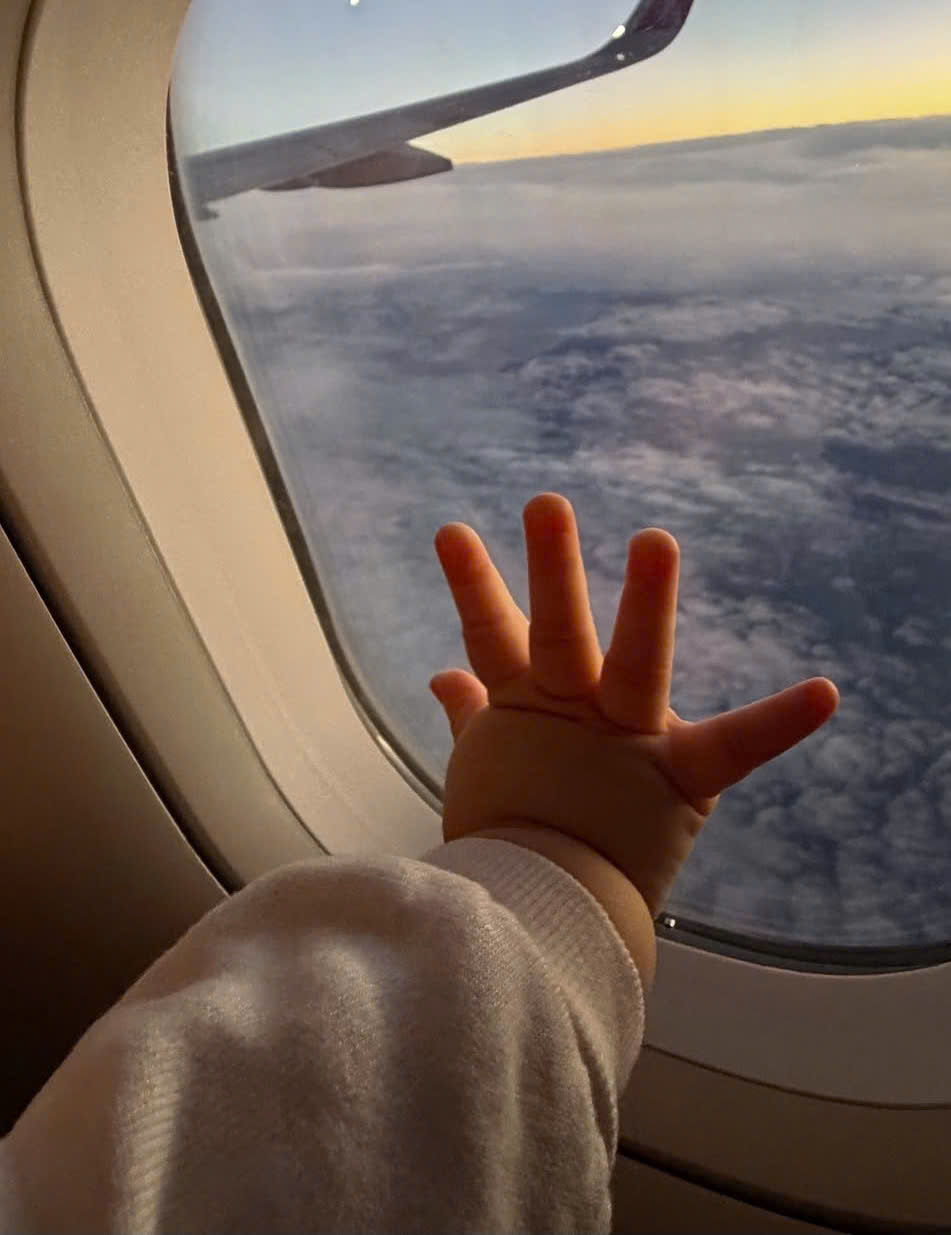
This is where preparation pays off.
After landing, you may be:
Jet-lagged
Hot and dehydrated
Carrying a sleeping baby
Navigating immigration and luggage
This is not the moment to:
Assemble a cot
Hunt for baby gear
Negotiate transport without a car seat
Parents consistently say arrival is the most stressful part - unless it’s planned properly.
⚠️ Common Mistakes Parents Make When Flying to Vietnam
Even experienced travellers often make a few avoidable mistakes when flying long-haul with babies:
Booking flights without considering baby sleep timing
Not confirming bassinet availability early enough
Packing too much baby gear instead of focusing on essentials
Assuming hotels or Airbnbs will provide baby equipment
Not planning airport transfers in advance of arrival
Underestimating how tiring immigration and luggage collection can be
👉 Parents consistently report that simplifying logistics makes the biggest difference to the overall trip experience.
Why Parents Strongly Recommend Renting Baby Equipment in Vietnam

This is one of the most consistent themes we hear.
🚼 Strollers
Vietnam sidewalks are uneven
Lightweight travel strollers work best
No airline damage risk
🛏️ Cots & Cribs
Hotel availability is limited
Quality varies
Familiar sleep setup helps babies settle immediately
🚗 Car Seats
Rarely provided by taxis or hotels
Essential for airport transfers
Non-negotiable for safety-focused parents
🍽️ High Chairs
Many hotels and rentals do not provide them (or have limited supply)
Rented high chairs make feeding easier and safer
Helps maintain a familiar mealtime routine for babies and toddlers
Reduces mess and stress during meals in hotels, Airbnbs, and villas
🔗 Essential Baby Equipment Rentals in Vietnam (Quick Access)
Baby Equipment | Best For | Rent Now |
👶 Strollers & Prams | City walks, airports, daily outings with babies & toddlers | |
🚗 Car Seats & Boosters | Safe airport transfers, taxis, and road trips | |
🛏️ Cribs & Travel Cots | Safe, comfortable sleep at hotels & Airbnbs | |
🍽️ High Chairs | Easy, mess-free feeding at your accommodation |
How KidEase Rentals Removes Arrival Stress Completely

Parents consistently highlight:
Equipment delivered before arrival
Clean, hotel-quality condition
Clear communication
Flexible delivery times
No heavy gear through airports
“Seeing the cot already set up after a 14-hour flight was everything.”
🛬 Arrival in Vietnam: The First 2 Hours Survival Guide
The most challenging part of travelling to Vietnam with a baby is rarely the flight, it’s the moment you land.
Here’s what experienced parents recommend preparing for:
🧳 Immigration & arrival
Carry baby in a carrier to keep hands free
Prepare passports and documents in advance
Expect queues depending on arrival time
🧠 Managing exhaustion
Babies may be overstimulated or asleep on arrival
Parents are usually tired, hot, and dehydrated
Keep expectations low for the first hour
🚗 Transport from airport
Taxis rarely provide car seats
Ride-hailing services are inconsistent for child safety
Pre-arranged transfers reduce stress significantly
🏨 Arrival at accommodation
The biggest relief moment is having everything ready
Babies settle faster when sleep space is already prepared
Parents avoid unpacking baby gear after long travel
👉 Families consistently say the first 2 hours in Vietnam set the tone for the entire trip.
Cities Parents Fly Into Most with Babies
KidEase Rentals supports families arriving in:
Ho Chi Minh City
Hanoi
Da Nang
Hoi An
Phu Quoc
Nha Trang
Hue
Each city presents different challenges, but the same need for safe, clean baby equipment.
Frequently Asked Questions: Flying Long-Haul to Vietnam with a Baby

Is it safe to fly long-haul to Vietnam with a baby?
Yes. Flying long-haul with a baby is generally very safe. Commercial aircraft are pressurised and regulated, and millions of families travel long distances with infants every year. Airlines are experienced in accommodating babies, and cabin crew are trained to assist families. Most paediatricians agree that healthy babies can fly safely from a young age, though it’s always best to consult your doctor before long trips.
🩺 Expert Travel Tip
Pediatric travel specialists generally recommend feeding infants during takeoff and landing to help reduce ear pressure discomfort.
Most healthy babies can safely travel long-haul from a young age, but parents should always confirm individual medical advice with their pediatrician before international travel.
👉 This kind of simple, practical guidance helps align the content with medical and travel authority expectations.
What is the best age to fly long-haul with a baby?
Parents often find that babies between 3 and 9 months old are the easiest to fly with long-haul. At this age, babies sleep frequently, are less mobile, and are easily soothed by movement and contact. Older babies and toddlers can still travel comfortably but may require more entertainment and movement breaks.
Do babies need a passport and visa to travel to Vietnam?
Yes. All babies, including newborns, require:
Their own passport
A valid visa or visa exemption (depending on nationality)
Vietnam has specific visa requirements that vary by country, so parents should check current entry rules well in advance of travel.
Should I book a bassinet seat for a long-haul flight to Vietnam?
Yes, it’s highly recommended to request a bassinet seat if your baby meets the airline’s size and weight limits. Bassinets provide a safe sleeping space and extra legroom. However, availability is limited and not guaranteed, so parents should also be prepared for their baby to sleep in a carrier or on them during the flight.
Is it better to book a direct flight or a connecting flight with a baby?
Both options can work well, but many parents prefer one well-timed connection rather than an extremely long nonstop flight. A connection allows parents to:
Change diapers more comfortably
Walk and stretch
Reset mentally
Help the baby settle again after takeoff
The best option depends on your baby’s temperament and your own energy levels.
How do I help my baby’s ears during takeoff and landing?
Feeding during takeoff and landing helps relieve pressure in a baby’s ears. Breastfeeding, bottle-feeding, or offering a pacifier encourages swallowing, which helps equalise pressure. Crying is also a natural way for babies to manage ear pressure and is completely normal.
How many diapers should I bring on a long-haul flight?
Parents recommend packing at least 50% more diapers than you think you’ll need. Delays, missed connections, and longer-than-expected flights are common on long-haul routes. A good rule is one diaper per hour of travel plus extras.
Can I bring baby food, formula, and breast milk through airport security?
Yes. Baby food, formula, breast milk, and sterilised water are permitted through airport security, even in quantities exceeding normal liquid limits. Security officers may inspect items separately, so allow extra time when passing through screening.
Should I bring a stroller onto the plane?
Most parents find that baby carriers or slings are far more useful than strollers on long-haul flights. Strollers can usually be gate-checked, but they:
Add bulk
Risk damage
Are rarely useful onboard
Many families choose to rent a lightweight stroller after arriving in Vietnam instead.
Will airlines help warm bottles or baby food?
Most airlines are happy to provide warm water for bottles or baby food. However, parents recommend bringing insulated containers and being prepared to manage feeding independently in case service is delayed.
How do babies usually sleep on long-haul flights?
Sleep varies widely, but many babies sleep better than expected due to:
Aircraft white noise
Gentle vibration
Close physical contact
Parents suggest lowering expectations, following flexible routines, and allowing contact naps rather than forcing a strict sleep schedule.
What happens if my baby cries during the flight?
Crying is completely normal, and most passengers are understanding. Experienced parents report that flight attendants are supportive and often offer assistance. The key is staying calm — babies pick up on parental stress more than noise levels.
What is the hardest part of flying to Vietnam with a baby?
According to parents, the hardest part is arrival, not the flight itself. After long travel, families are tired, hot, and navigating immigration, luggage, and transport. Having essential baby equipment already waiting at your accommodation dramatically reduces stress.
Is baby equipment easy to find in Vietnam?
While Vietnam has a growing baby market, quality baby equipment is not always easy to find, especially:
Hotel cots
Car seats
High-quality strollers
Availability and safety standards vary, and last-minute sourcing can be stressful for new arrivals.
Should I bring my own car seat to Vietnam?
Most parents prefer not to bring their own car seat due to:
Airline handling damage
Bulk and weight
Difficulty using them in taxis
Renting a certified car seat in Vietnam is a safer and more convenient option for airport transfers and local travel.
Why do parents recommend renting baby equipment in Vietnam?
Parents consistently recommend renting because it allows families to:
Travel lighter
Avoid airline damage
Use equipment suited to local conditions
Arrive to a fully prepared accommodation
This is especially helpful after long-haul flights when energy levels are low.
What baby equipment can I rent in Vietnam?
Families commonly rent:
Lightweight travel strollers
Baby cots and cribs
Car seats
High chairs
These items are delivered directly to hotels or Airbnbs and collected after departure.
Which cities in Vietnam are best set up for families with babies?
Parents frequently travel with babies to:
Ho Chi Minh City
Hanoi
Da Nang
Hoi An
Phu Quoc
Nha Trang
Each destination has family-friendly accommodation, though access to baby equipment varies — making rentals especially useful.
Parents recommend booking baby equipment before boarding your flight. Knowing that essential items are already waiting provides peace of mind and allows families to focus on the journey rather than logistics on arrival.
Is Vietnam baby-friendly overall?
Yes. Vietnamese culture is very family-oriented, and locals are generally welcoming and helpful toward babies and young children. While infrastructure may differ from Western countries, families who prepare properly find Vietnam to be an enjoyable and memorable destination with a baby.
Final Advice from Parents Who’ve Done It

The most repeated advice from experienced parents is simple:
Prepare the essentials. Let go of perfection.
You don’t need every gadget.
You don’t need to control every nap.
You just need to remove the biggest stress points.
Flying long-haul to Vietnam with a baby isn’t something to fear - it’s something to prepare for.
Make the Journey Lighter, Safer & Calmer
Travel lighter.
Arrive rested.
Start your Vietnam family adventure smoothly.
Strollers • Cots • Car Seats • High Chairs
Hotel & Airbnb Delivery Across Vietnam
Useful Resources
Vietnam Baby Travel Hub: Car Seats, Strollers & Rentals Explained
Core Issues
🚚 Logistics & Delivery
🌴Related Phu Quoc Issues
🔗 Related Baby Equipment in Phu Quoc
🇻🇳 Baby Equipment Rental Across Vietnam
📖 Learn more about visting Vietnam with Children
KidEase Rentals - Vietnam's trusted baby and child equipment rental service for international families.
📞 +84 7088 66 447 | 📧 admin@KidEase-Rentals.com | Delivering across Vietnam


Comments