
Vietnam Baby & Toddler Travel Etiquette Guide: Cultural Tips for Parents Visiting Vietnam
Updated: May 11
Navigate Vietnam with confidence: The expert guide to cultural sensitivity, local customs, and respectful travel with babies, toddlers & children under 5
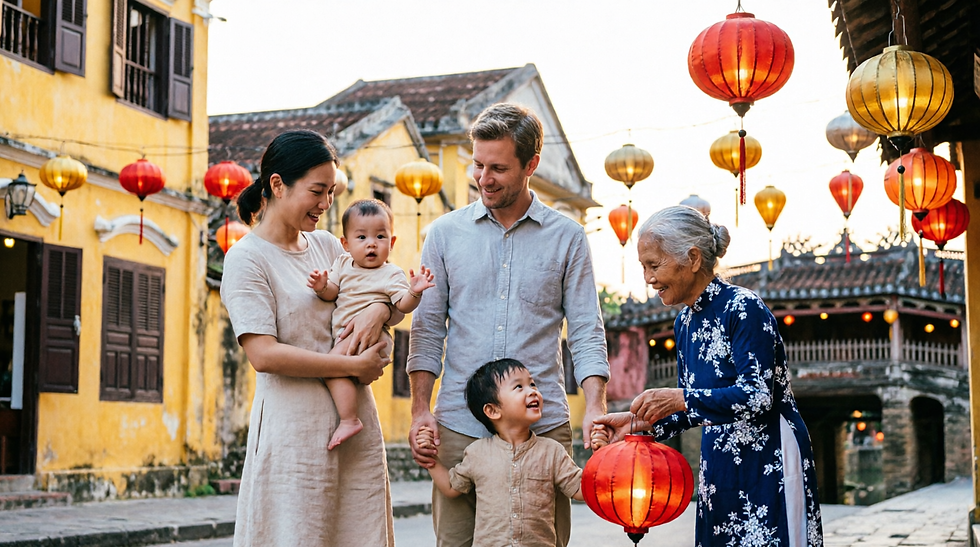
🇻🇳 This guide explains cultural etiquette for traveling in Vietnam with babies, toddlers, and young children under 5. It covers essential local customs and respectful behavior including temple etiquette, dining and feeding norms, public nursing expectations, photography rules, gift-giving traditions, and how to navigate everyday interactions with Vietnamese families and communities. It is designed to help international parents travel confidently while respecting cultural values and building positive local connections.
🎯 QUICK ANSWER: Your Cultural Etiquette Checklist
✅ Greeting babies: Smile warmly, avoid touching heads (sacred in Vietnamese culture)
✅ Public nursing: Accepted in tourist areas; use discreet cover in rural/temple settings
✅ Temple visits: Remove shoes, dress modestly, keep babies quiet during prayers
✅ Dining out: High chairs rare; rent portable high chair for restaurants
✅ Local attention: Embrace curiosity about foreign babies; polite smiles go far
✅ Gift customs: Bring small gifts if visiting Vietnamese homes with baby
✅ Photography: Always ask permission before photographing local children
This guide covers what our general Vietnam baby travel guide doesn't: deep cultural norms, etiquette for sacred spaces, navigating local attention, festival considerations, and respectful interactions that build trust with Vietnamese communities.
👶 GREETING & INTERACTING WITH BABIES: VIETNAMESSE CUSTOMS
🙏 The Head is Sacred: Touching Etiquette

Cultural Context: In Vietnamese belief, the head is the most sacred part of the body – the seat of the soul. Touching a baby's head without permission can be seen as disrespectful or even harmful.
💡 KidEase Insight: In many Vietnamese temples, locals will not correct foreign visitors even if etiquette is being broken. Instead, they remain silent out of politeness. This means you may never realise you’ve made a mistake - until it affects the experience subtly (distance from locals, lack of interaction). Observing first is more important than asking.
✅ Do:
Smile warmly and greet parents first: "Xin chào!" (Hello)
Compliment the baby indirectly: "Bé đẹp quá!" (Baby is so beautiful!)
Ask permission before touching: "Cho tôi bế bé được không?" (May I hold the baby?)
Offer gentle waves or claps to engage toddlers
❌ Avoid:
Patting or ruffling a baby's hair (even affectionately)
Putting hats/headwear on local babies without asking
Playfully tapping a toddler's head (common in Western cultures)
Pro Tip: If a Vietnamese elder touches your baby's head, they likely mean blessing – respond with a grateful smile and "Cảm ơn!" (Thank you).
👀 Handling Local Curiosity About Foreign Babies
Reality Check: International babies often attract warm curiosity in Vietnam – especially in rural areas or smaller towns. This is almost always positive!

✅ Embrace it gracefully:
Smile and make brief eye contact with onlookers
Let curious children wave or say hello (supervise interactions)
Carry a few small stickers or local candies to share (ask parents first)
Use baby carrier for easy mobility when crowds gather
✅ Set gentle boundaries if needed:
Politely step back if attention feels overwhelming
Use simple phrases: "Xin lỗi, bé mệt" (Sorry, baby is tired)
Move to quieter spaces for feeding/napping
❌ Avoid:
Showing frustration or avoiding eye contact (can seem rude)
Letting strangers feed your baby without permission
Photographing local children without asking parents first
💡 KidEase Insight: Curiosity toward babies in Vietnam is socially positive, not intrusive. In many rural and traditional communities, children are seen as a “blessing indicator”- which is why babies often attract attention, blessings, and gentle interaction from strangers.
Parent Story: "
In a Hoi An market, an elderly woman gently touched my daughter's cheek and whispered a blessing in Vietnamese. I didn't understand the words, but the warmth in her eyes said everything. We still have the photo."
- Sarah, (UK family)
“In rural Ninh Binh, people were incredibly kind but very curious about our baby. Without KidEase’s advice, we might have felt overwhelmed. Instead, we understood it was genuine warmth - not intrusion - and ended up sharing tea with a local family in a way we’ll never forget.”
- Helen J. (London, UK)
🤱 PUBLIC NURSING & FEEDING: CULTURAL NORMS BY LOCATION
🌆 Urban vs. Rural Expectations
Location Type | Nursing Acceptance | Parent Tips |
Major Cities (HCMC, Hanoi, Da Nang) | ✅ High acceptance in cafes, malls, parks | Use nursing cover for extra discretion in busy areas; many international cafes have private corners |
Tourist Towns (Hoi An, Nha Trang, Phu Quoc) | ✅ Very accepting; used to international families | Beach clubs often have shaded nursing areas; ask staff for quiet spot |
Rural Villages & Markets | ⚠️ Mixed; traditional views may prefer discretion | Use lightweight nursing cover; find quiet corner or step aside briefly |
Temples & Pagodas | ❌ Avoid inside sacred spaces | Feed baby outside temple grounds; plan feeding times around visits |
Public Transport | ✅ Generally accepted on buses/trains | Window seat offers privacy; carry small blanket for coverage |
🍼 Feeding in Restaurants: What to Expect
✅ High chairs: Rare outside international hotels/resorts. Solution: Rent a portable high chair through KidEase Rentals for restaurant use.

✅ Baby food: Most Vietnamese restaurants don't serve baby-specific meals. Solution:
Order plain rice, steamed vegetables, or congee (rice porridge)
Bring baby food pouches for backup
Ask for extra bowl/spoon for self-feeding toddlers
👉 Parent Tip: Ordering “plain rice first” buys you time - Vietnamese restaurants serve it fast, giving toddlers something safe while adults order.
✅ Noise tolerance: Vietnamese dining culture is lively! Moderate baby noise is generally accepted. Tip: If baby gets fussy, a brief walk outside is appreciated.
✅ Sharing culture: It's common for locals to offer food to children. Polite response: "Cảm ơn, bé còn nhỏ"(Thank you, baby is still small) if declining.
🛕 TEMPLES, PAGODAS & SACRED SPACES: BABY ETIQUETTE
✅ Before You Enter: Preparation Checklist
✅ Dress code for parents:
Shoulders and knees covered (light scarf + long shorts work)
Remove hats/sunglasses inside main prayer areas
Avoid overly revealing clothing even in heat
✅ Baby/toddler prep:
Feed/change baby before entering to minimize disruptions
Bring quiet toys or soft books for distraction
Use baby carrier instead of stroller (easier on steps, more respectful)
✅ Equipment considerations:
Remove shoes at entrance (bring slip-ons for easy on/off)
Strollers typically left at entrance; use compact, foldable model
Rent a lightweight carrier through KidEase for temple visits
“We visited Hoi An during Tet with our 18-month-old and honestly had no idea how strict temple etiquette was until we KidEase mentioned it. The reminder about shoes and quiet behaviour saved us from a very awkward moment at the first pagoda. A local monk actually smiled at us after we followed the rules - it completely changed the experience.”
- Tessa R. (Sydney, Australia)
👉 Parent Tip: Carry a lightweight carrier instead of a stroller - temple stairs and thresholds are common, even in modern sites.
🙏 During Your Visit: Respectful Behavior
✅ Do:
Speak in hushed tones; let baby's natural sounds be (soft coos are fine)
Follow locals' lead: bow slightly at altars if comfortable
Allow baby to observe quietly; avoid forcing interaction with statues
Take photos only where permitted (look for signage or ask)
❌ Avoid:
Letting toddlers climb on altars, statues, or offering tables
Changing diapers inside temple buildings (use facilities outside)
Flash photography during prayer ceremonies
Pointing feet toward Buddha statues (feet considered lowest part of body)
🌸 Special Considerations: Festivals & Ceremonies

Tet (Lunar New Year):
Temples are extremely crowded; consider visiting early morning
Red envelopes (lì xì) may be offered to children – accept with both hands and thank giver
Avoid scheduling major temple visits on Tet Eve (very busy with family rituals)
Mid-Autumn Festival (Tết Trung Thu):
Children are celebrated! Lantern processions welcome toddlers
Small mooncakes may be offered – check ingredients before giving to baby
Great photo opportunity with baby in traditional áo dài (rent locally)
Local Village Ceremonies:
Always ask permission before bringing baby into ceremonial spaces
Observe quietly from edges if unsure of protocols
A small donation to the temple fund is appreciated
📚 Explore More Family Travel Guides
🍽️ DINING OUT WITH BABY: RESTAURANT ETIQUETTE & TIPS
🪑 Seating & High Chair Realities
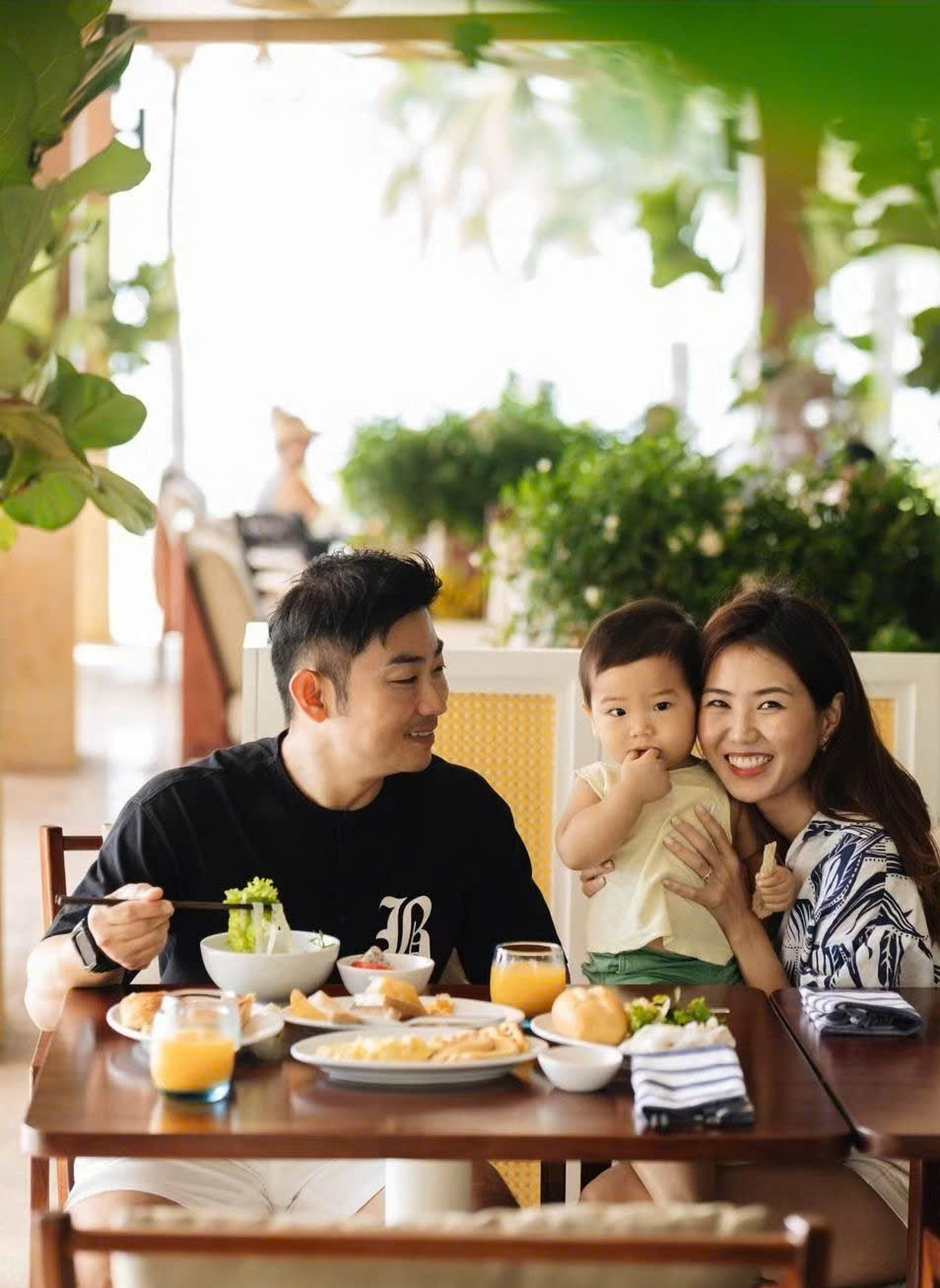
✅ What to expect:
Traditional Vietnamese restaurants rarely provide high chairs
International hotels/resorts usually have them (confirm when booking)
Outdoor cafes often have flexible seating for families
✅ Smart solutions:
Rent a portable high chair through KidEase Rentals – use in restaurants, villas, parks
Request corner table for easier baby management
Bring clip-on booster seat as backup for older toddlers
🗣️ Noise & Behavior Expectations
✅ Vietnamese dining culture is communal and lively:
Moderate baby chatter, coos, or soft crying is generally accepted
Families often dine together with multiple generations – babies are part of life!
Staff in family-run restaurants often adore visiting babies
✅ When to step out:
If baby has prolonged crying fit, a brief walk outside is appreciated
During formal ceremonies or quiet tea ceremonies, plan baby care around timing
In upscale restaurants, use discretion with noise levels
✅ Pro phrases for restaurant staff:
"Bé cần ghế ăn" (Baby needs high chair)
"Nước ấm cho bé" (Warm water for baby)
"Xin lỗi, bé mệt" (Sorry, baby is tired)
“What surprised us most was how relaxed restaurants were with our toddler. We were nervous about noise, but staff actually brought a bowl of plain rice for him before we even asked. The KidEase tip about asking for ‘ít muối, không ớt’ was a game changer.”
- Darryl T. (Melbourne, Australia)
🥢 Food Sharing & Baby Meals

✅ Baby-friendly Vietnamese dishes:
Cháo (rice porridge) – plain or with chicken/pork, easy to digest
Cơm trắng (steamed white rice) – soft, easy for toddlers to self-feed
Rau luộc (steamed vegetables) – carrots, pumpkin, chayote
Trứng hấp (steamed egg) – protein-rich, mild flavor
❌ Foods to avoid for babies/toddlers:
Nước mắm (fish sauce) – very salty, high sodium
Ớt (chili) – spicy, even "mild" versions can upset little tummies
Raw herbs – may carry bacteria; cook or avoid for under-2s
Street food with unknown water sources – stick to cooked, hot items
✅ Ordering tip: Ask for "ít muối, không ớt" (less salt, no chili) when ordering baby portions.
💡 KidEase Insight: Many Vietnamese restaurants will quietly adjust seasoning for babies - but only if explicitly asked. Staff rarely volunteer modifications due to cultural assumptions that “Western parents will specify.” A simple request like “ít muối” often changes the entire meal experience.
📸 PHOTOGRAPHY & SOCIAL MEDIA: RESPECTFUL PRACTICES
👶 Photographing Your Baby in Vietnam
✅ Do:
Capture candid moments of baby experiencing Vietnamese culture
Include local context: lanterns, boats, markets, beaches
Share respectfully: avoid portraying Vietnam as "exotic" or "backward"
✅ Credit & context matters:
Tag locations accurately (e.g., "An Bang Beach, Hoi An" not just "Vietnam beach")
Mention local businesses you support (hotels, restaurants, KidEase Rentals!)
Use hashtags like #VietnamWithBaby #FamilyTravelVietnam to connect with community
📷 Photographing Local Children & Families
✅ Golden rule: Always ask permission first
Smile, point to camera, ask parent: "Chụp ảnh được không?" (May I take a photo?)
Accept "no" gracefully with a smile and "Cảm ơn!"
Offer to share the photo via WhatsApp if they're interested
✅ Special considerations:
Avoid photographing children in vulnerable situations (sleeping, crying, undressed)
Never promise to send photos unless you genuinely will follow through
In ethnic minority villages, some communities have specific beliefs about photography – observe local cues
✅ If permission is granted:
Show the photo to parents/children – they often love seeing themselves!
A small tip (5,000-10,000 VND) is appreciated but not required
Avoid posting photos that could identify a child's home/school without explicit consent
❌ Never:
Photograph children without any adult present
Use photos of local children for commercial purposes without written consent
Share photos that could embarrass or endanger a child
👉 Parent Tip: Showing a photo of your own baby first often breaks the ice before asking permission to photograph local families.
🎁 GIFT-GIVING & HOME VISITS: CULTURAL CUSTOMS
🏡 Visiting a Vietnamese Home with Baby
✅ Before you go:
Remove shoes at entrance (bring clean socks or slip-ons)
Bring a small gift: fruit, cookies, or flowers (avoid white flowers – associated with funerals)
Dress modestly: covered shoulders/knees show respect
✅ Baby etiquette in homes:
Let hosts greet baby first; avoid letting baby touch ancestral altars
Accept offered tea/snacks for parents (declining can seem rude)
If baby cries, a brief step outside is fine – no need to apologize excessively
✅ Gifts for baby from hosts:
Vietnamese hosts may offer small gifts to visiting babies (candy, toys, red envelopes at Tet)
Accept graciously with both hands: "Cảm ơn!"
If concerned about ingredients/safety, accept and check later
🎁 Bringing Gifts for Vietnamese Families
✅ Appropriate gifts when visiting with baby:
High-quality baby items from your home country (if you know the family has a baby)
Local specialties from your region (packaged, non-perishable)
Books with bilingual text (Vietnamese/English) for toddlers
❌ Avoid:
Clocks (symbolize death in Vietnamese culture)
Sharp objects (knives, scissors – symbolize cutting relationships)
Overly expensive gifts (may cause discomfort or obligation)
✅ Presentation matters:
Wrap gifts neatly; red/gold are auspicious colors
Offer gift with both hands as sign of respect
Don't expect immediate opening – gifts may be set aside to open later
🚌 TRANSPORTATION ETIQUETTE: PUBLIC TRANSIT, CYCLOS & BOATS
🚕 Grab, Taxis & Private Transfers
✅ With baby equipment:
Always book car seat through KidEase Rentals for safety
Fold stroller before entering vehicle; drivers appreciate preparation
Tip driver 10-15% for assistance with baby gear (not required but appreciated)
✅ Communication tips:
Have destination written in Vietnamese for driver
Use Grab app for transparent pricing + English interface
Save KidEase WhatsApp for transport coordination support
“We would never have thought about car seats in Vietnam until KidEase explained it. On arrival in Ho Chi Minh City, the driver was already waiting with a properly installed seat. As first-time parents travelling Asia, that level of detail gave us total peace of mind.”
- Alicia & Ben W. (Toronto, Canada)
👉 Parent Tip: Always confirm car seat installation before the driver arrives - most issues happen from last-minute setup, not lack of equipment.
🚲 Cyclos, Bicycles & Walking Tours
✅ Baby-wearing advantage:
Compact baby carriers work better than strollers on cyclos/narrow streets
Practice carrier use before trip for comfort + confidence
Bring sun hat + light blanket for baby in open-air transport
✅ Respectful pacing:
Cyclo drivers often enjoy chatting; brief friendly interaction is welcome
If baby gets fussy, a quick stop is fine – communicate with gesture + smile
Tip 20,000-50,000 VND for short rides with baby gear
🚤 Boat Tours & River Cruises
✅ Safety first:
Confirm life jackets available in baby/toddler sizes before booking
Hold baby securely on lap; avoid standing while boat is moving
Bring motion sickness remedies if baby is prone to seasickness
✅ Cultural considerations:
On Mekong Delta tours, local families may invite interaction – accept warmly but supervise baby closely
Remove shoes before entering floating house homes (if tour includes visit)
Small tip for boat driver (10,000-20,000 VND) shows appreciation
🎉 FESTIVALS & HOLIDAYS: CELEBRATING WITH BABY
🧧 Tet (Lunar New Year) – January/February

✅ Baby-friendly Tet traditions:
Lì xì (red envelopes): Elders give money to children for luck – accept with both hands
New clothes: Dress baby in new outfit (red/gold auspicious) for first day of Tet
Family meals: Join quiet family gatherings; baby can observe traditions
⚠️ Tet travel considerations:
Many businesses close 3-7 days; plan essentials in advance
Transport books early; prices surge during peak travel
Crowds at temples/markets – use baby carrier for mobility
✅ KidEase tip: Book equipment rental early for Tet travel – high demand!
👉 Parent Tip: During Tet, the best family experiences often happen outside main tourist zones where crowds are lighter and locals are more relaxed.
🏮 Mid-Autumn Festival (Tết Trung Thu) – September/October
✅ Perfect for toddlers!
Lantern processions: Let baby hold small, safe lantern (supervise closely)
Mooncake tasting: Offer tiny piece of plain mooncake to toddlers (check ingredients)
Lion dances: Enjoy from comfortable distance; loud drums may startle babies
✅ Photo opportunities:
Baby with traditional lantern = precious memory
Family in áo dài (rent locally) for festival photos
Capture baby's wonder at colorful decorations
🌸 Local Village Festivals
✅ Respectful participation:
Observe first before joining activities
Ask permission before bringing baby into ceremonial spaces
Small donation to festival fund shows appreciation
✅ Baby considerations:
Festivals can be loud/crowded – use noise-reducing headphones if baby is sensitive
Bring familiar snacks/toys for comfort in new environment
Plan short visits; babies may tire quickly with stimulation
⚠️ WHAT MOST INTERNATIONAL PARENTS GET WRONG IN VIETNAM
Assuming baby-friendly means “Western-style baby facilities”
Not realising head-touching is culturally sensitive
Expecting high chairs in most restaurants
Over-avoiding social interaction (Vietnam is highly social)
Not adjusting expectations during Tet or festivals
Thinking silence is required in all cultural spaces
👉 In reality, Vietnam is extremely welcoming - but culturally specific.
🗣️ LANGUAGE & COMMUNICATION: KEY PHRASES FOR PARENTS
✅ Essential Vietnamese Phrases for Baby Situations
English | Vietnamese | Pronunciation | When to Use |
"Hello!" | Xin chào! | "Sin chow!" | Greeting anyone |
"Thank you" | Cảm ơn! | "Gahm uhn!" | After receiving help/gifts |
"Baby is tired" | Bé mệt | "Bay met" | When needing quiet space |
"Where is bathroom?" | Nhà vệ sinh ở đâu? | "Nyah veh sinh oh dow?" | For diaper changes |
"Warm water for baby" | Nước ấm cho bé | "Nook ahm cho bay" | Requesting at restaurants |
"May I hold baby?" | Cho tôi bế bé được không? | "Cho toy beh bay duk khom?" | When interacting with local babies |
"Sorry, baby crying" | Xin lỗi, bé khóc | "Sin loy, bay kok" | Apologizing for noise |
"Beautiful baby!" | Bé đẹp quá! | "Bay dep kwah!" | Complimenting local babies |
✅ Pro communication tips:
Smile + gesture goes further than perfect pronunciation
Learn baby's name in Vietnamese: "Bé [Name]" (e.g., "Bé Emma")
Carry a small phrase card or use translation app offline
🤝 BUILDING CONNECTIONS: RESPECTFUL INTERACTIONS WITH LOCALS
👵 Elders & Community Respect
✅ Vietnamese culture values elders deeply:
Greet elders first when entering a space
Use respectful terms: "Ông" (grandfather), "Bà" (grandmother)
Allow elders to hold baby first if they offer (with parent permission)
✅ When elders offer advice about baby care:
Listen politely even if you disagree
Respond with "Cảm ơn, chúng tôi sẽ cân nhắc" (Thank you, we'll consider)
Maintain your parenting choices while honoring their intent
👶 Connecting with Local Families

✅ Natural interaction opportunities:
Parks/beaches: Local parents often smile/chat about babies
Markets: Vendors may show interest in foreign baby products
Homestays: Shared meals create organic connection moments
✅ Bridge cultural gaps with:
Photos of your baby/family from home (shared on phone)
Small gifts from your country (stickers, postcards)
Genuine curiosity about their family traditions
✅ Avoid:
Over-sharing personal details early in interactions
Assuming all Vietnamese families parent the same way
Taking photos of local families without explicit permission
🙏 Understanding "Face" (Thể Diện) in Baby Contexts
Cultural concept: "Face" = reputation, dignity, social harmony. Preserving others' face is crucial.
✅ Baby-related face considerations:
If baby has tantrum in public, stay calm – your composure preserves everyone's face
Avoid correcting local caregivers in front of others (discuss privately)
Accept compliments about baby gracefully; deflect excessive praise modestly
✅ If cultural misunderstanding occurs:
Apologize simply: "Xin lỗi" (Sorry) + smile
Focus on solution, not blame
Remember: most Vietnamese people are forgiving of well-meaning foreigners
🆘 WHEN CULTURAL NORMS CONFLICT WITH PARENTING NEEDS
🤱 Scenario: Nursing in Conservative Setting
✅ Balanced approach:
Step to quieter area or use lightweight cover for discretion
If approached, explain gently: "Bé cần ăn" (Baby needs to eat)
Most Vietnamese understand baby needs – stay calm and polite
👉 Parent Tip: In Vietnam, asking for a quiet corner is far more effective than looking for designated nursing rooms - they are rare even in malls.
😭 Scenario: Baby Crying During Quiet Ceremony
✅ Graceful exit strategy:
Briefly bow/apologize with hand over heart
Step outside calmly; no need for elaborate explanation
Return when baby settles or continue activities elsewhere
🎁 Scenario: Offered Food/Drink You Can't Accept
✅ Polite decline phrases:
"Cảm ơn, bé còn nhỏ" (Thank you, baby is still small)
"Bé dị ứng" (Baby has allergy) – universally understood
Accept item graciously, then dispose discreetly later if needed
✅ Prevention tip: Carry baby's preferred snacks to avoid reliance on offered items.
🌐 Multilingual Support
❓ FREQUENTLY ASKED QUESTIONS (Vietnam Baby & Toddler Cultural Etiquette)
🇻🇳 Is Vietnam culturally safe and welcoming for babies and toddlers?
Yes - Vietnam is one of the most family-oriented countries in Southeast Asia, and babies are widely welcomed in public spaces.
However, cultural expectations are different from Western countries. Babies are often seen as a community joy, which means you may experience more attention, interaction, and curiosity than you’re used to.
💡 KidEase Rentals Insight
Most international parents initially interpret Vietnamese curiosity as “intrusion,” but it is usually positive social warmth. Once understood, it often becomes one of the most memorable parts of the trip.
🙏 Is it okay for locals to touch my baby in Vietnam?
In many cases, yes - but it depends on context.
Vietnamese culture places importance on warm human connection, and gentle interaction with babies (such as touching cheeks or hands) is often meant as affection or blessing.
However, it should still be done respectfully.
👉 Parents should feel comfortable politely stepping in if needed.
💡 KidEase Rentals Insight
In rural areas, older generations may see touching a baby’s hand or cheek as a way of “sharing good luck.” In cities, interaction is more restrained and often just smiling or waving.
🛕 What are the rules for taking babies into temples in Vietnam?
Babies are allowed in temples and pagodas, but etiquette is very important:
Remove shoes before entering
Dress modestly (shoulders + knees covered)
Keep noise low during prayer areas
Avoid changing nappies inside temple buildings
Use baby carrier instead of stroller where possible
💡 KidEase Rentals Insight
Temple staff will rarely correct you directly even if mistakes are made. Instead, locals may simply adjust their behaviour around you - which is why observing others first is essential.
🤱 Is breastfeeding accepted in public in Vietnam?
Yes - but with cultural variation:
Tourist areas → widely accepted
Urban cafés/malls → generally accepted, discreet nursing preferred
Rural or traditional areas → more discretion recommended
Temples → best to feed outside sacred spaces
💡 KidEase Rentals Insight
Vietnamese culture prioritises practicality over formality, but modesty is still valued in traditional spaces. A light cover is usually enough to avoid discomfort in sensitive settings.
🍽️ Are restaurants in Vietnam baby-friendly?
Yes - but not in a “Western facility” way.
Most local restaurants:
do NOT have high chairs
do NOT have baby menus
DO welcome children warmly
Families are deeply integrated into dining culture.
💡 KidEase Rentals Insight
Staff often won’t ask what your baby needs - but will happily adapt if you request it. A simple phrase like “ít muối, không ớt” (less salt, no chilli) can completely change a meal for a toddler.
🪑 Do I need to bring or rent baby equipment in Vietnam?
Yes - this significantly improves travel comfort.
Most essential items like:
strollers
car seats
high chairs
cots
are not consistently available outside international hotels.
💡 KidEase Rentals Insight
The biggest mistake families make is assuming Vietnam has “walk-in baby infrastructure.” In reality, the country is highly flexible - but not equipment-standardised. Renting equipment removes 90% of daily friction.
📸 Is it okay to take photos of local children in Vietnam?
Only with explicit permission from a parent or guardian.
Always:
smile first
ask permission clearly
respect “no” without hesitation
avoid photographing vulnerable situations
💡 KidEase Rentals Insight
In many rural areas, photography carries cultural sensitivity beyond privacy - it can relate to personal or spiritual beliefs. When unsure, don’t assume consent.
🎭 What cultural mistakes do tourists with babies commonly make?
The most common mistakes include:
touching children’s heads without knowing cultural meaning
entering temples with shoes on
assuming silence is required everywhere
not preparing for curiosity from locals
expecting Western baby facilities
💡 KidEase Rentals Insight
The biggest issue is not “wrong behaviour” - it’s lack of contextual awareness. Vietnam is highly forgiving, but very context-driven.
🎁 Should I bring gifts when visiting Vietnamese homes with a baby?
Yes, it is considered polite.
Good gifts:
fruit baskets
packaged snacks
small souvenirs from your home country
Avoid:
clocks
sharp objects
overly expensive gifts
💡 KidEase Rentals Insight
Gifts are not about value in Vietnam - they are about symbolic respect and relationship balance. Presentation and intent matter more than price.
🚕 Is it safe to travel around Vietnam with a baby?
Yes, but planning matters.
Families commonly use:
Grab (ride-hailing)
private drivers
pre-arranged transfers with car seats
💡 KidEase Rentals Insight
The biggest safety issue is not traffic itself - it is lack of car seat preparation in advance, especially during airport arrivals. Pre-booking equipment dramatically improves safety outcomes.
🧠 What is the most important cultural rule for parents in Vietnam?
Observe first, act second.
Vietnam is a highly social and respectful culture where behaviour is often learned visually, not verbally explained.
💡 KidEase Rentals Insight
Locals rarely correct visitors directly. Instead, they adapt around you. This makes observation the most powerful “guidebook” you can have.
🌏 Is Vietnam more or less strict than Western countries for children in public spaces?
Neither - it is simply different.
More tolerant of noise and presence of children
Less structured in facilities
More socially interactive
More community-involved in parenting moments
💡 KidEase Rentals Insight
Western countries often regulate children through infrastructure. Vietnam regulates children through social harmony and shared awareness, which feels very different in practice.
👶 What should I absolutely not worry about when travelling with a baby in Vietnam?
Parents often worry unnecessarily about:
baby crying in public
feeding in restaurants
stroller access
general noise
In reality:
Vietnam is extremely tolerant of babies.
💡 KidEase Rentals Insight
Local families often expect babies to be part of public life. A crying baby is not seen as disruption - it is seen as normal life happening.
📲 What should I do if I feel unsure about a cultural situation?
When in doubt:
pause
observe locals
simplify your behaviour
smile and stay calm
💡 KidEase Rentals Insight
Most cultural misunderstandings in Vietnam are resolved not by rules, but by tone, patience, and humility. The way you respond matters more than what you do.
💡 FINAL VERDICT: Your Cultural Confidence Checklist
✅ BEFORE TRAVEL
Learn 5-10 key Vietnamese phrases for baby situations
Research festival dates if traveling during Tet/Mid-Autumn
Pack lightweight nursing cover + modest clothing for temples
Download cultural etiquette cheat sheet + offline phrase guide
✅ DURING TRAVEL
Greet elders first; smile warmly at curious onlookers
Ask permission before photographing local children
Remove shoes at homes/temples; dress modestly at sacred sites
Embrace local curiosity about your baby with grace
✅ IF UNCERTAIN
Observe local families first, then follow their lead
When in doubt, choose the more conservative option
Message KidEase WhatsApp for cultural guidance: +84 7088 66447
Remember: Vietnamese people deeply value family and children. Your respectful curiosity about local customs will be met with warmth, patience, and often, delightful connections.
📲 Save our WhatsApp now: +84 7088 66447
We're here to help navigate cultural nuances + logistics – so you can focus on meaningful moments with your baby.
Useful Resources
Vietnam Baby Travel Hub: Car Seats, Strollers & Rentals Explained
Core Issues
🚚 Logistics & Delivery
🇻🇳 Baby Equipment Rental Across Vietnam
🌏 Vietnam Family Travel Blog Hub (Expert Guides for Parents)
🏙️ City & Destination Guides (Where to Go with a Baby)
🧭 Planning Your Vietnam Family Trip
🏡 Accommodation, Airbnb & Family Setup
🚗 Transport, Flights & Getting Around
🧸 Baby Gear, Strollers & Equipment
🛡️ Safety, Health & Practical Tips
This guide was created by KidEase Rentals based on direct experience supporting 5,000+ international families traveling through Vietnam with babies and toddlers.
Every cultural insight is verified with local experts and every phrase is tested by traveling parents. Have a cultural question while traveling?
Message us on WhatsApp – we reply in minutes. 🌴👶🇻🇳✨


Comments